Western U.S. Canyon Tour Guide: Grand Canyon, Antelope Canyon, Bryce Canyon, and Horseshoe Bend
by Travie
Explore the iconic canyons of the American Southwest—from Grand Canyon and Antelope Canyon to Bryce Canyon and Horseshoe Bend—through a cinematic road trip across Arizona and Utah.
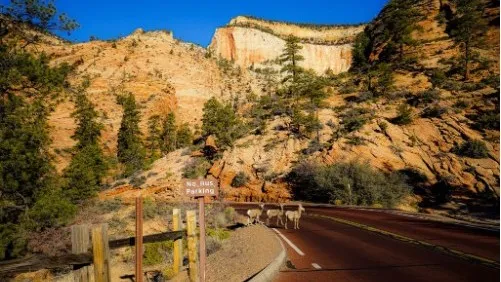
Zion Canyon
My oldest bucket-list dream began inside a computer monitor.
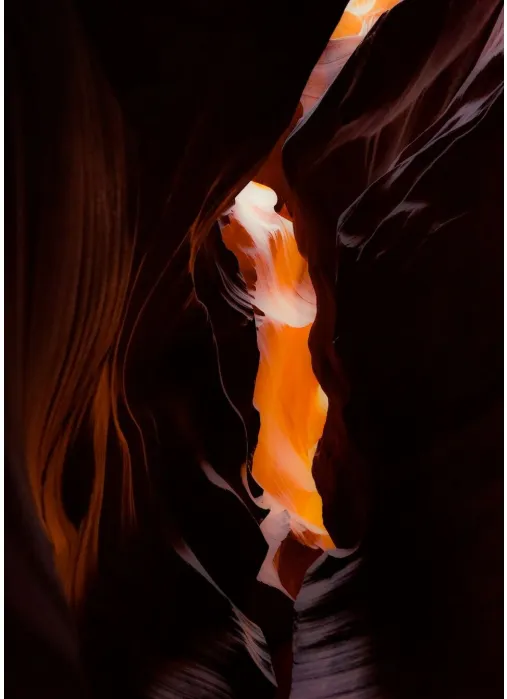
Long before Google Images existed, I stared endlessly at a single Windows wallpaper: towering sandstone walls carved into flowing curves, with a thin beam of light falling into the canyon below. Even as a child, I knew the landscape felt impossible—too strange, too beautiful to belong to Earth.
For years, I believed the place was the Grand Canyon. Only later did I discover the truth: the image that changed my childhood was actually Antelope Canyon.
That realization altered something fundamental. What began as a fleeting fascination with caves slowly expanded into something larger: a longing to step inside landscapes shaped by time itself.
And eventually—more than twenty years later—I found myself standing in the American Southwest.
■Landscapes Carved by Time Grand Canyon
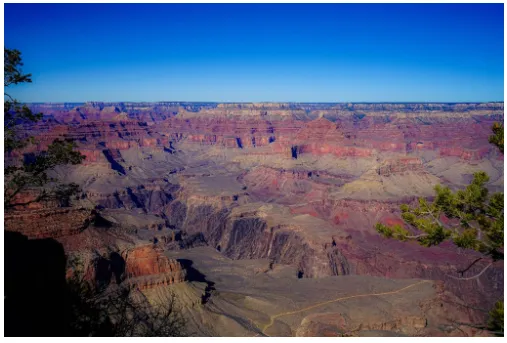
Even its name feels insufficient. “Grand” hardly captures the scale of a canyon stretching roughly 446 kilometers across Arizona, reaching widths of up to 29 kilometers and depths averaging 1.6 kilometers.
Formed over approximately six million years through tectonic activity and relentless erosion by the Colorado River, the Grand Canyon exposes geological layers spanning from the Precambrian era to the Cenozoic—a record of Earth’s history laid bare in stone.
Recognized as a UNESCO World Heritage Site in 1979, it remains one of the most significant geological landscapes on the planet.
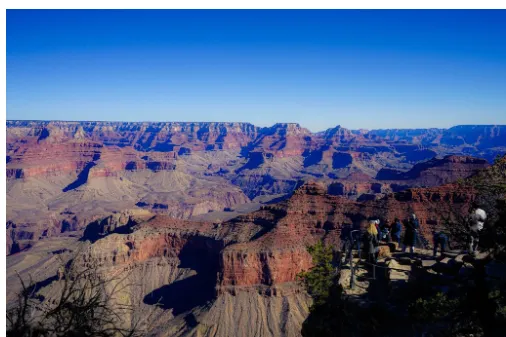
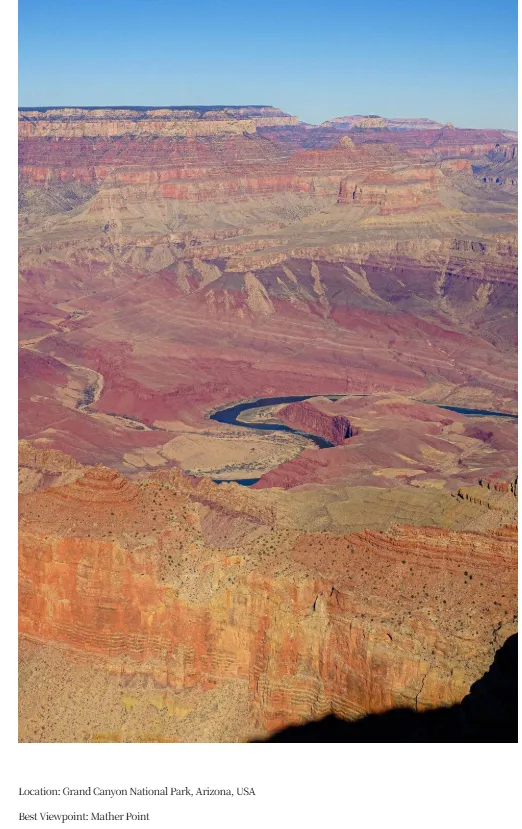
Panoramic layered cliffs and vast canyon landscape at Grand Canyon South Rim
The South Rim Experience
Among the canyon’s various sections—South, North, East, and West Rim—the South Rim is the most accessible and visited year-round.
For first-time visitors, Mather Point offers perhaps the most iconic introduction.
And yet, standing there, reality feels strangely absent.
After driving more than five hours from Las Vegas while repeatedly hearing how enormous the canyon would be, the actual sight still surpassed imagination. The scale becomes almost abstract—as if you’re not inside nature, but observing another world entirely.
■Where Light Becomes Architecture Antelope Canyon
The moment you enter Antelope Canyon, you understand immediately:
Water created this place. Over millions of years, flash floods carved narrow passageways into soft sandstone, shaping one of the world’s most visually surreal landscapes.
Upper vs Lower Antelope Canyon
The canyon is divided into two sections: • Upper Antelope Canyon: Wider, flatter, and easier to walk through • Lower Antelope Canyon: Narrower, steeper, and more physically adventurous
Located within Navajo Nation territory, all visits require accompaniment by certified Navajo guides.
After boarding rugged jeeps and crossing rough desert terrain, visitors enter towering sandstone corridors that feel almost cathedral-like.
Then the light appears.
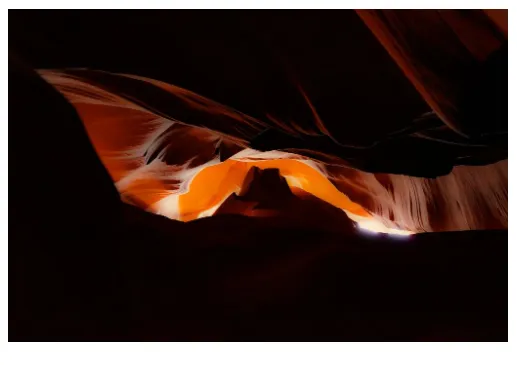
As sunlight filters through narrow openings above, the canyon transforms hour by hour. In the quiet morning, thin beams drift gently across the walls. As the sun rises, the sandstone begins changing color continuously:
• Orange • Crimson • Pink • Soft violet
Every turn feels different from the last.
At one point, our guide pointed toward a rock formation resembling a human eye—a moment so startling it felt almost deliberate, as if the canyon itself were watching back.
The real Antelope Canyon proved even more mysterious than the wallpaper that first inspired me.
■The Kingdom of Stone Spires Bryce Canyon National Park
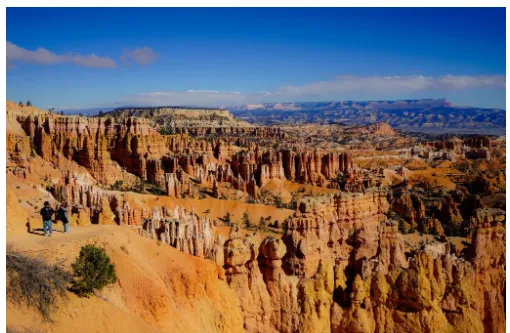
At elevations between 2,400 and 2,700 meters, Bryce Canyon feels almost unreal.
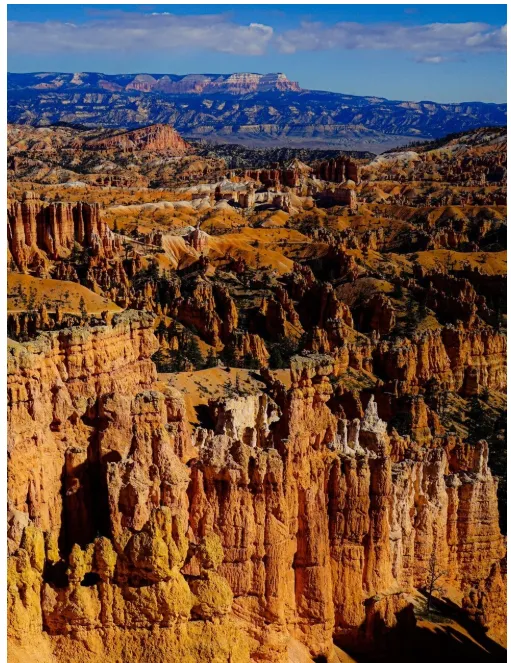
Thousands of jagged red rock pillars rise from the basin floor like a forgotten civilization turned to stone.
Thousands of red hoodoo rock formations at Bryce Canyon National Park
What Are Hoodoos?
These formations, called hoodoos, were created through cycles of freezing and thawing that gradually eroded softer sedimentary rock while leaving harder layers intact.
The result: • Towering stone spires • Layered colors of red, orange, and white • A landscape unlike anywhere else in the American Southwest
Though we visited under bright midday light, Bryce Canyon is most famous at sunrise—when the hoodoos ignite in deep crimson tones beneath the first light of day.
For those descending the hiking trails into the canyon, the experience becomes immersive rather than observational.
You don’t simply view Bryce Canyon.You move through it. ■Curves Drawn by Water and Stone Horseshoe Bend & Lake Powell
Few landscapes communicate geological time as dramatically as Horseshoe Bend.
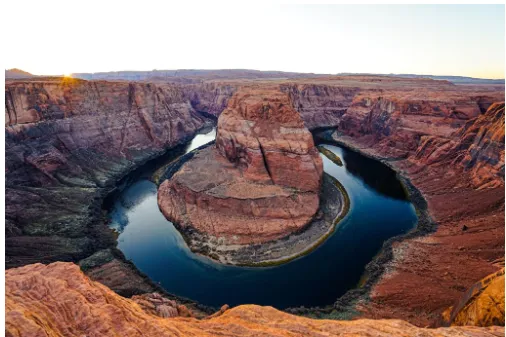
Over millions of years, the Colorado River carved a near-perfect horseshoe-shaped curve into the sandstone plateau, creating one of the Southwest’s most photographed viewpoints.
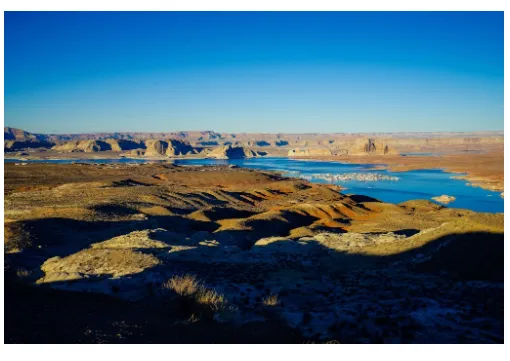
Aerial-style view of Horseshoe Bend and Colorado River in Arizona
Standing nearly 300 meters above the river, visitors peer down at dark green water winding between towering red cliffs.
It’s breathtaking—and mildly terrifying.
Tourists inch toward the cliff edge for photographs, balancing excitement against instinctive fear. I attempted the same, though the resulting image captured less confidence than panic.
Lake Powell
Nearby lies Lake Powell, a massive reservoir created after dam construction in the 1960s.
It took 17 years to fully fill.
Today, it stands as the second-largest man-made lake in the United States, where boats drift between towering canyon walls that blur the boundary between natural and artificial landscapes.
Together, Horseshoe Bend and Lake
Powell form a striking contrast:
• One carved entirely by nature • The other is shaped by human intervention The Landscape Beyond the Screen
As a child, I believed those canyon walls existed only inside a monitor.
Now I know better. The American Southwest is larger, stranger, and far more emotional than any wallpaper could ever suggest.
These are places shaped not only by water and wind, but by time on a scale difficult to comprehend.
And standing inside them, you realize something quietly humbling: Some dreams survive adulthood for a reason.
Reference Written & Photographed byLee Eun-ji’ Provided by Travie
※ Picks respects the rights of all copyright holders. If you do wish to make material edits, you will need to run them by the copyright holder for approval.
more from
Travie
Travie
'Rota's Greatest Charm Is Simplicity' -An Interview With Mayor Aubry Manglona Hocog
2026-05-20 00:00:00
Travie
Sportscation in Saipan: 6 Spots for Running, Diving, and Ocean Adventures
2026-05-18 00:00:00
Travie
Saipan Marathon 2026: A First-Timer's Race Day Story
2026-05-17 00:00:00
Travie
Waterbomb Seoul July 2026: K-Pop Water Festival Returns
2026-05-17 00:00:00
BEST STORIES
Travie
Sportscation in Saipan: 6 Spots for Running, Diving, and Ocean Adventures
2026-05-18 00:00:00
Street Food Guy
How Digital Tools Are Changing the Way Travel Creators Share Food Culture
2026-05-15 00:00:00
Fair Observer
Greenland and the New Frontier of Eco-Geopolitics
2026-05-20 00:00:00
AllblancTV
Try This 4Min SixPack ABS Workout (Part 1/2)
2026-05-18 00:00:00
Travel
Travie
Yeongwol Travel Guide: Following the Tragic Footsteps of King Danjong in Korea
2026-05-16 00:00:00
Travie
Best Maldives Family Resorts: 4 Luxury Stays for Kids and Parents
2026-05-13 00:00:00
Travie
Korea Train Booking on Klook: Discounts for Foreign Travelers
2026-05-13 00:00:00
Travie
'Rota Island, Northern Mariana Islands' : A Hidden Pacific Gem
 Zion Canyon