Forty-two days across Eurasia: An intrepid train traveler's epic journey from London to Incheon the long way
by KoreaJoongAngDaily
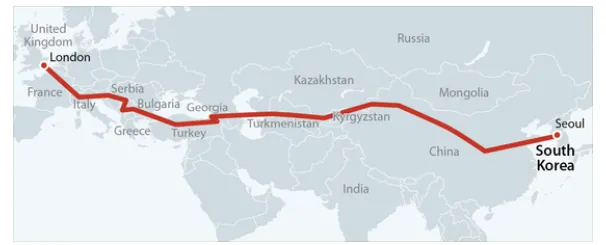
The night before I set out for Seoul — an 8,900-kilometer (5,500-mile) trek as the crow flies — I was sharing a beer with friends on a rooftop in London. As the fire pit crackled between us, one of them relayed his girlfriend’s reaction to my plans.
"What’s wrong with the bloke — can’t he just take a plane?"
"Really? So she thinks I'm mad."
"We all do, but it's the right kind of madness," he assured me.
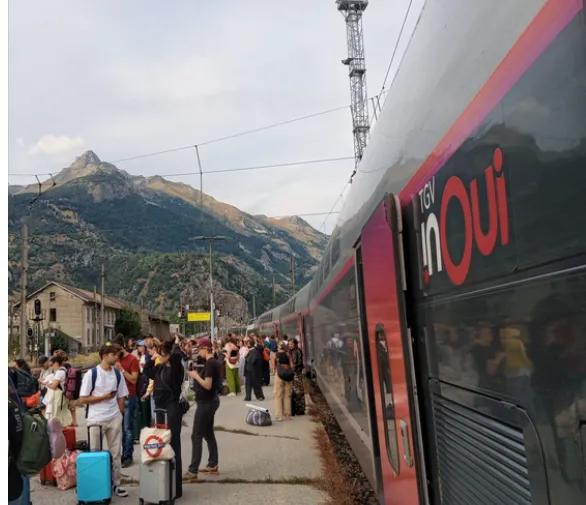
Changing trains in the town of Modane in the French Alps [JOEL DOWN]
I wanted to believe him. In the days leading up to the journey, I had become restless, unable to sleep as I fixated on everything that could go wrong — from earthquakes in Turkey to risky border crossings in some of the world’s roughest geopolitical hot spots.
At least I was well-prepared.
Armed with a 70-liter (18.5-gallon) slash-proof backpack, a spare phone, a spreadsheet of expenses, a laptop and a long list of bookings, I had done the legwork. Many of the finer points had been fleshed out with AI, which could even find the email addresses of niche transport companies when I needed them. The legitimacy of this research was called into question, however, when I asked Copilot to create a map of my very linear route. It drew a giant circle from “Londan” to “Incheen,” even suggesting I take a ship through mainland Russia.
London to Milan
For now, all I had to do was catch the 9:33 a.m. Eurostar to Paris. I found my way to the elegant redbrick facade of London St. Pancras Station, hugged my mum tightly and assured us both that everything would be okay.
There is hardly a better train to demonstrate the possibilities of rail travel than one that goes under the sea and connects two European capitals in less time than you can read Baudelaire’s “Les Fleurs de Mal” (1857). The Eurostar is perhaps the continent’s smoothest operator, with air conditioning, upholstered furnishings and an iconic lick of paint.
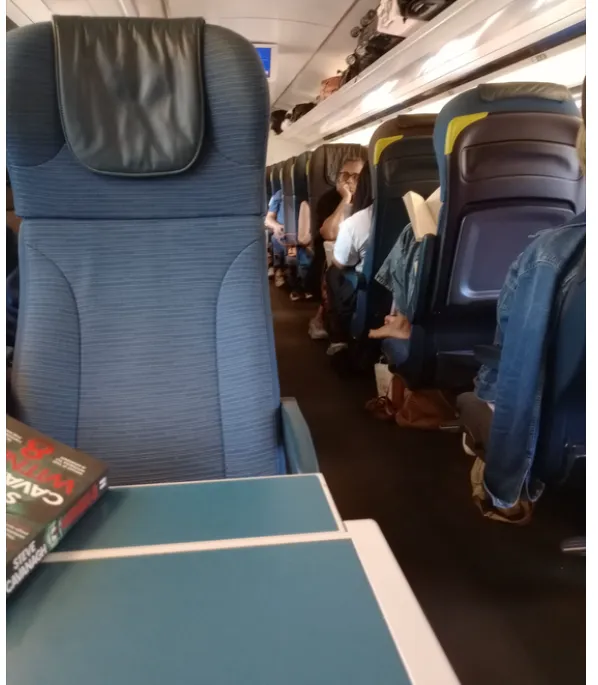
Inside the Eurostar on the trip from London to Paris [JOEL DOWN]
People who have never taken the Eurostar tend to confuse it with a theme park ride or an aquarium. And who can blame them? A train that travels under a body of water is pretty special.
I took my seat next to a family who were quizzing each other on Premier League footballers.
“Odegaard or Saka?” The father asked his son.
“Saka, obviously!” Came the reply.
They supported Arsenal, my football team, which felt like a good omen.
Setting out from low-lying Paris, my next train would tilt the journey skyward, eventually hitting 1,050 meters (3,445 feet) at the border town of Modane in the French Alps before burrowing through the mountains and striding past Bardonecchia, an Italian town nestled at the foot of a vast ridge. This part of the ride is particularly inspiring, with the tracks veering toward cloud-capped peaks and overlooking deep valleys awash with urban lights.
I leaned into the window as dusk stole through the valley and the train began its slow descent toward Milan, the industrial and fashion capital of Italy.
Milan to Trieste
Milan comes at you all tangled tramlines, concrete sculptures and speeding sedans. However, behind the bravado, I found it to be a friendly, sentimental, even peaceful city. I bought a piadina — an Italian flatbread — the next day, and spent a few hours taking in unusual sights like Bosco Verticale, a “living” skyscraper draped in trees.
I then returned to Milano Centrale and boarded my train to the coast. Another high-speeder, it glided past emerald vineyards, sloping hills and industrial tracts before shooting above a forest canopy and inching toward the northeastern Italian port city of Trieste. Views from the dining car were dazzling in this last stretch; the broad surface of the Adriatic Sea looked like a sheet of blue silk, ruffled by the wind.
Trieste to Zagreb
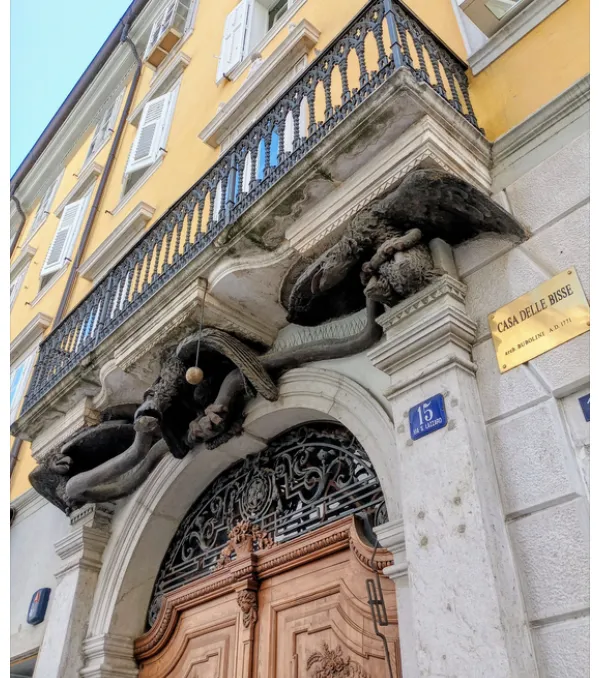
I spent the morning in Trieste, drinking coffee and discovering some local sites, including a home built with vinegar instead of water in the mortar — above the door is a sculpture of three eagles tearing apart a snake, symbolizing the defeat of the French emperor Napoleon by Russia, Prussia and Austria.
Home in Trieste built with vinegar instead of water in the mortar — above the door is a sculpture of three eagles tearing apart a snake, symbolizing the defeat of the French emperor Napoleon by Russia, Prussia and Austria [JOEL DOWN]
However, the hostel stay brought me down to earth with a bump. It was unsettling to be staying in such places again after so many years without having to deal with loud snoring or moldy rooms. Sure enough, there was a sadness about the hostel in Trieste, where lonely men sat in the bar watching late-night basketball, and the staff swore at people for leaving the door open.
It was not like I had a choice in the matter. My estimated cost for this adventure was approximately $3,300, and in Europe's more expensive cities — including my next stop, Zagreb — hostels were my best shot at staying on budget.
With two days to explore Zagreb, I found my way to the Museum of Lost Tales. Enriched with digital artworks, this small space relates an untold history of the Slavic diaspora, where stories of headless Gods and sinister spirits proliferate. One deity is said to have eaten the sun, which would have won applause in Zagreb, given the heat and humidity that had settled into the city.
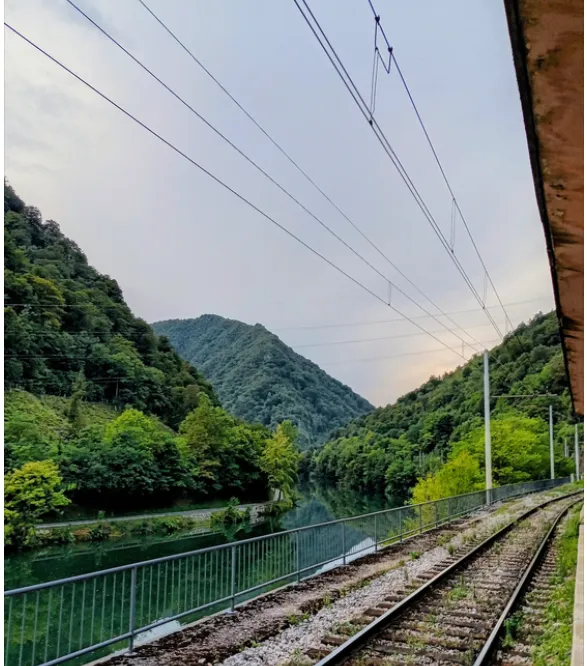
The train makes its way through the mountains of Slovenia. [JOEL DOWN]
I thought about the slow-speed train I had taken to get here. Huge limestone cliffs loomed above a river, while a strong breeze cooled the inside of the old-fashioned coach car as it juddered over the tracks. The foliage was so dense it seemed to act like natural air conditioning, a luxury that I’d miss on the next leg. Indeed, Slovenia alone houses 1 percent of global biodiversity, despite covering just 0.004 percent of the Earth’s surface.
Zagreb to Montenegro
Because the rail network between the Balkan nations remains fragmented, I had to catch a coach out of Zagreb. The sour-looking driver shrugged when I showed him my ticket, permitting me to take my seat next to a boiling-hot engine.
Minutes oozed by as temperatures rose to 34 degrees Celsius (93.2 degrees Fahrenheit), then 35, then 36. Small fires broke out along the agricultural plains. When we hit the Serbian border, I glanced downward to find my leg covered in a red liquid. Was my skin on fire?
Not quite. The dye from my grocery bag had melted onto my calf. By the time we’d reached Belgrade, I was feeling like the scorched sunflowers I’d seen along the way. Faces turned earthward, leaves curling at the edges.
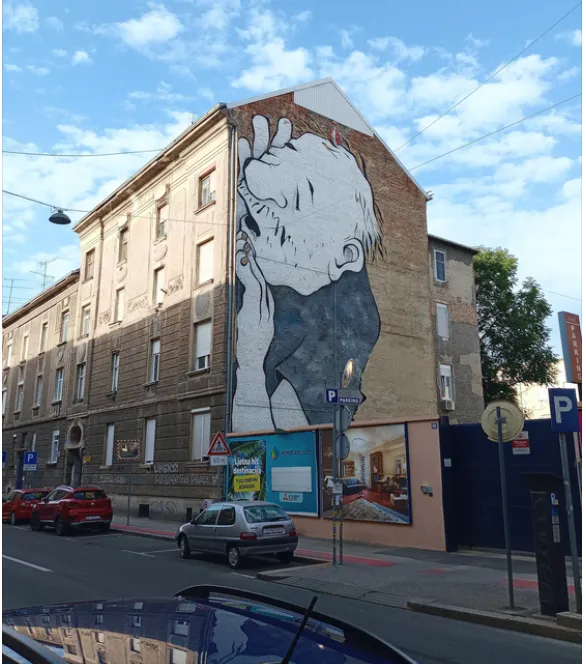
Street mural on a building in Zagreb, Croatia [JOEL DOWN]
With my battery running low and no data access in Serbia, I had to rely on the kindness of strangers to find my accommodation. A local student helped me onto the right tram to the city center, where I paced the same street up and down until Broky, a 23-year-old Chinese waiter, poured me a glass of water, found me a table and said I could stay as long as I needed.
This was a pattern across the Balkans. For every stern bus driver, there were two or three friendly faces who made me feel welcome. When my seat was “stolen” on an eight-hour train to Montenegro, the culprit poured me a cup of Turkish coffee in apology.
Noticing that I’d set my tripod on the table, he added, “The views are better on your side anyway.
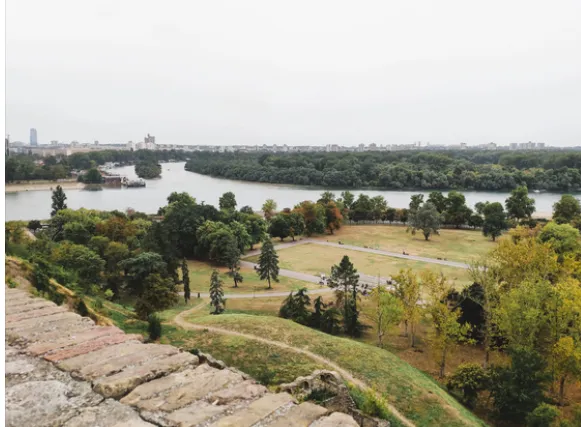
View of Belgrade from Belgrade Fortress [JOEL DOWN]
They were breathtaking. Towers of gray karst rock skimmed the sky, just as the snaking Sava River slithered ever deeper into the ground.
I got into a conversation with the two German women sitting opposite me, who said they would have rather taken the sleeper service had it not been sold out. It has gained popularity for its famous mountain sunrise.
“So where are you going?” I was asked.
“Now? I’m going to Mojkovac, in the north [of Montenegro]. But after that, I’ll be traveling all the way to Seoul.”
They raised their eyebrows.
“On trains?”
“Trains, coaches, a ferry... Anything goes, really.”
“Why Seoul? That’s pretty far.”
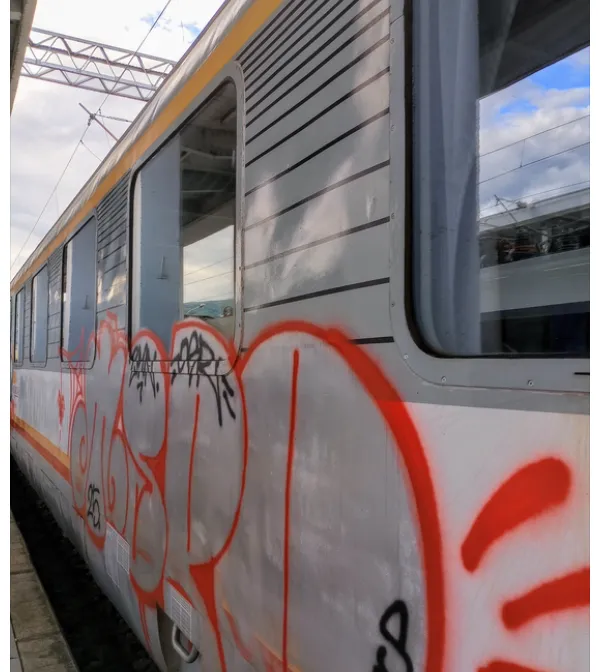
The train to Montenegro [JOEL DOWN]
“My girlfriend just moved back there, and she kept telling me what an amazing country it is, so I’ve decided to follow her.”
“How come you’re not flying?”
I explained that I had always avoided planes because of their impact on the planet. When I was 13, I signed a pledge not to fly at all after I watched a harrowing documentary about climate change.
While I didn’t expect to come home the same way, this journey felt like taking my commitment to its natural end. A flight from London to Seoul emits 1.8 tons of carbon dioxide equivalent per passenger, whereas my primarily train journey would release about 744 kilograms (1,640 pounds) — reason enough to take the slow route.
“I’m catching one plane, though,” I confessed. “For safety reasons.”
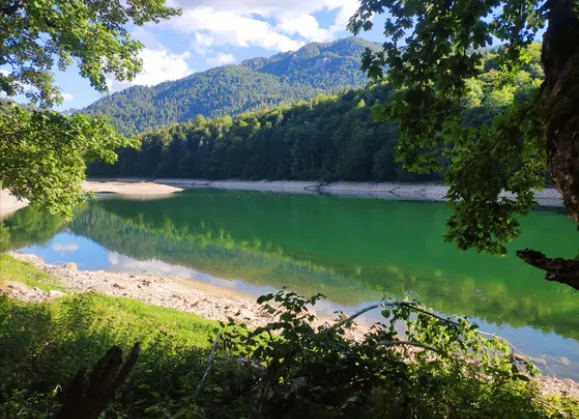
Beautiful Lake Biogradsko in Montenegro [JOEL DOWN]
The train screeched to a halt outside an empty station. There was a chill in the air, and I could smell pinewood from the lumberyard. I had arrived in Mojkovac.
My triangular cabin — just 25 euros ($30) a night — sat on a floodplain of Montenegro’s Tara River, home of Europe’s deepest canyon. Despite the tap-tap-tap of woodworms gnawing at the beams above my head and the screeching of crickets in the fields around me, I wouldn’t have traded it for anything.
When I awoke the following morning, I was mobbed by a pair of dogs. One of them, a stray, would follow me around for the next three days — panting in the heat as I crossed the highway to get groceries.
Dragan, my Montenegrin host, agreed to drive me to the nearby Biogradska Gora National Reserve. He had wrinkles as deep as a plowed field and fingernails that had grown so thick from his work, they looked like they were made of resin. We communicated mainly with gestures and translation apps, as I strained to convey how beautiful the surroundings were.
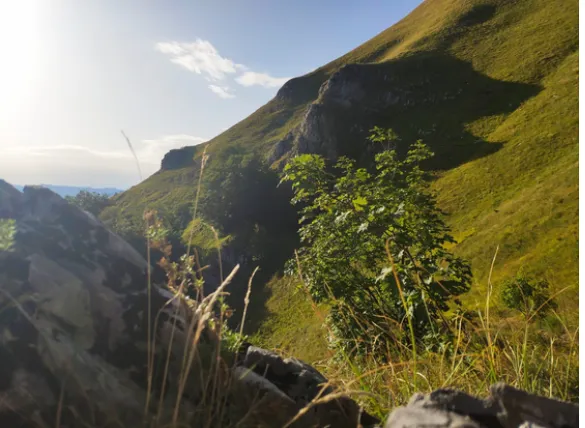
Inside the park, I was greeted by an audacious level of greenery. Biogradska Gora holds one of Europe’s last native rainforests, with a crystalline lake at its core.
Biogradska Gora National Reserve in Montenegro [JOEL DOWN]
While Korea has 600-year-old zelkova trees and the United States has its ancient redwoods, Montenegro is all about the beech tree. Gnarled and lichen-coated, many are as thick as truck tires, taller than office buildings and stretch back half a millennium. Looking up at their branches, I planned an ascent to the park's peak. It took me ten hours to get back down — ensuring that I’d never forget this place.
Across Anatolia
Catching an overnight coach through Serbia, I headed onward to Sofia, the capital of Bulgaria.
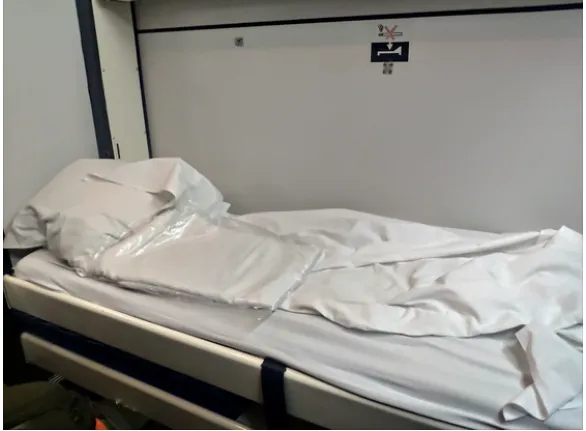
I woke as early as possible to secure a ticket on the iconic Bosphorus Express bound for Istanbul. Whether it’s the romantic name, the nostalgia or the chance to sleep as you creep across borders, the Bosphorus is the way to get to Istanbul from the rest of Europe.
Bed aboard the Bosphorus Express [JOEL DOWN]
My head was pounding as we pulled into Istanbul the next morning, mostly from the Balkan fruit brandy I’d drunk with my trainmates the night before, and I tried to get to grips with this infinite city.
I first learned about it through the documentary “Ekumenopolis” (2012), which I watched as a high school geography student. The film highlights how precarious life in Istanbul can be, with old housing stock vulnerable to earthquakes and poorer families being cast out of their neighborhoods at developers' behest. Captivated by this place that was cast as both “beauty” and “beast,” I longed to visit before something terrible happened and it slid into the Bosphorus forever.
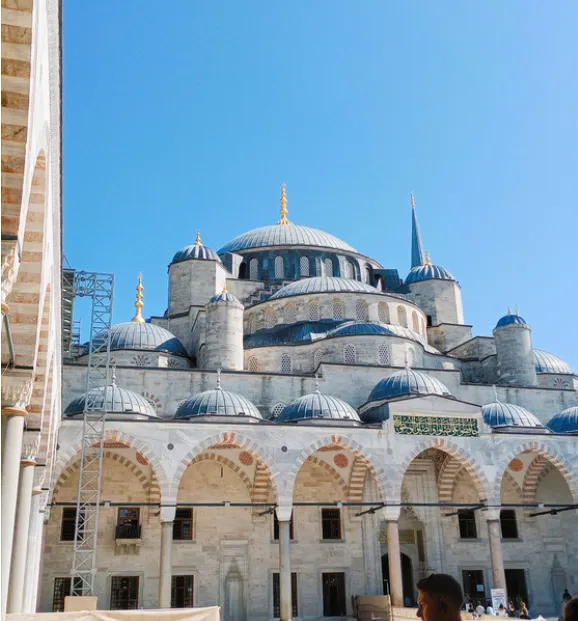
Now here I was, easily charmed by the city’s details — the sea foam ribboning away from the boats, the stray cats that are like honorary citizens, the tea-drinkers leaning against the wall of a mosque, the bloodred flags billowing in the wind, the call to prayer reverberating through every street. The city is so boundless, you would need a lifetime to feel at home — if you can afford one.
Blue Mosque in Istanbul [JOEL DOWN]
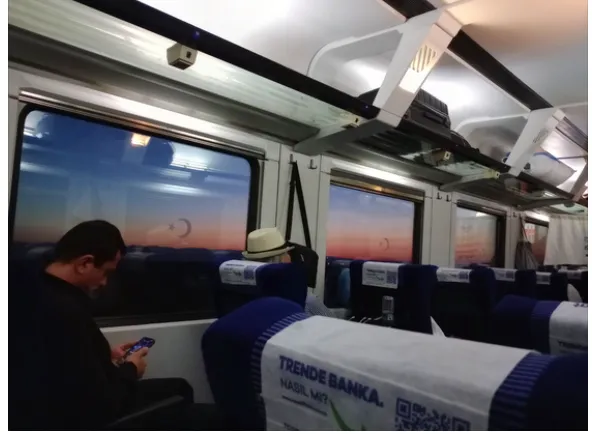
I departed on the overnight Ankara Express, which links Istanbul with the Turkish capital of Ankara, high on the Anatolian plateau. I was curious to see travelers spraying lemon-scented kolonya — an aromatic, alcohol-based disinfectant traditionally used in Turkey — around their seats. The sunrise that followed made up for the pain that I now had in my neck from nodding off at an awkward angle.
My energy levels at this point were dropping fast. It didn’t help that I’m a vegetarian and was struggling to source meals that packed any kind of nutritional punch. Instead, after an instant soup and a packet of crisps, I spent the entire night gripped by nausea.
This was the wrong moment to go without sleep. Ahead of me lay the longest stage of my trip: a 28-hour continuous train ride from one side of Anatolia to the other. The Dogu Express passes through countless landscapes as it tracks from Ankara to Kars, a historic city in the highlands of far northeast Anatolia, from gorges carved by the Euphrates River to rust-colored volcanic tuffs that resemble the surface of Mars. It has become so popular that a second, longer service now runs in winter: Turkey’s answer to the Siberian Express.
Shattered, but determined not to miss it, I boarded the Dogu to meet my cabinmates: Nils, a German filmmaker, and Ibrahim, a Turkish retiree.
Sunrise on the Ankara Express [JOEL DOWN]
We bonded over cay, or Turkish tea — Nils and I glued to the contoured masses rushing by, while Ibrahim appeared introspective, perhaps unmoved by views he had seen a hundred times before.
The sun split like an egg over the horizon, yielding to a radiant half-moon. Nils said he’d seen a family of three hanging fairy lights around their window, a charming way to personalize the trip. Sleeper trains are usually pragmatic to a fault, and the Dogu is no exception. Compartments are furnished with sofa seats that fold down into beds, and a wooden ladder for the top bunks. In the dining car, a seam of holes in the roof allows air to flow, avoiding the need for air conditioning.
It was here that most travelers dwelled during the long hours of the day, many absorbed in their journals as the landscapes drifted by. In a remote village, I saw a small boy pulling a toy truck behind him with a piece of string. A bird of prey hovered over an empty field. People waved at us from hilltops. The cook's eyes grew heavy. Only the train's hum kept me awake.
After finally reaching the end of the line in Kars, Nils and I checked into the same alpine hotel, where he pitched the idea of hitchhiking to Hopa, an industrial city on the Black Sea near the border with Georgia, which would be my next destination.
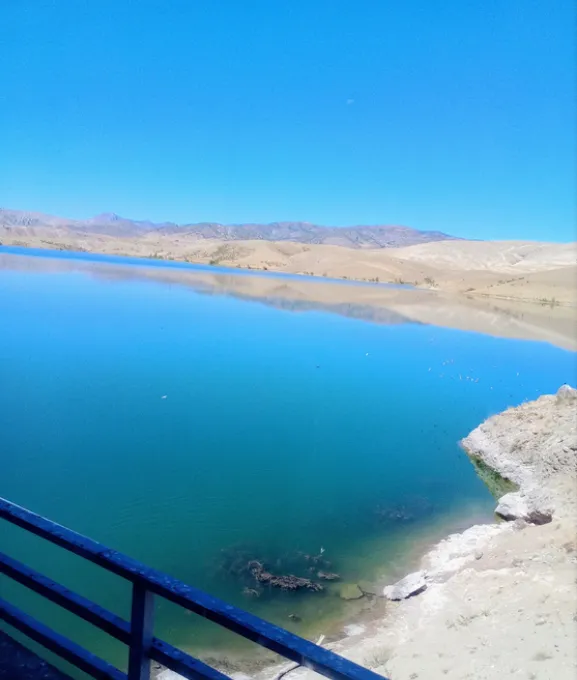
Scenery in eastern Anatolia [JOEL DOWN]
I was reluctant. Hitchhiking had always struck me as a risk not worth taking, and I had made it this far by sticking to the script. But the longer we waited for the late afternoon coach, the more appealing Nils’ idea looked.
Before I knew it, I was in the backseat of a stranger’s car cruising along a motorway. The driver, Ozer, dropped a concerning comment in broken English.
“Crash. Here. Yesterday. Me!” he said, turning around to make sure I felt included, as we swerved toward a row of bollards on the motorway. I hoped he’d just missed a few words.
“This is as far as I can take you. I’ve done all I can,” Ozer later wrote on his phone before we thanked him and got out.
It took us two hours to find our next ride, our stress levels rising as the sun dipped lower. But we were about to meet the kindest lorry driver this side of the Black Sea.
Vadim, a stocky Ukrainian, handed us two bottles of sparkling peach juice as we climbed aboard. I’d never been in the cab of a lorry before, but this one seemed homely. There was a bed behind the seats, and a photo of Vadim’s wife and child was tacked to the sun visor. At first, he said that he could only take us as far as the next major town.
Soon, Vadim was throwing his hands up in the air at the endless switchbacks and introducing me to a Ukrainian rap song about Boris Johnson.
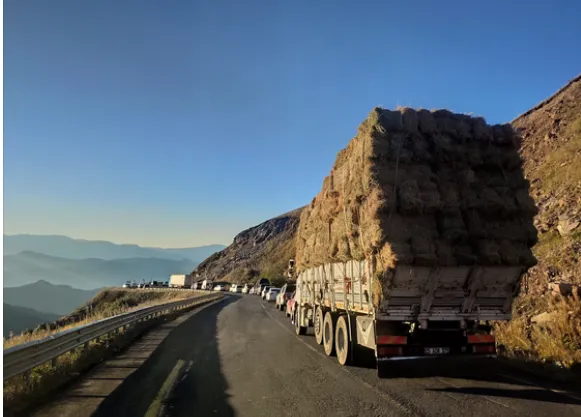
Hitchhiking to the Black Sea city of Hopa, near the border with Georgia [JOEL DOWN]
Nils gathered details about our driver’s career, impressed to learn that he usually caught a ferry home across the Black Sea.
"That must be fun?"
"Three days on a boat with fifty other men and no signal. No. Not very fun," Vadim replied with a tense smile.
When we eventually took a break at a roadside restaurant, I glimpsed a bus gunning it around the bend.
“The one from Kars,” I said to Nils, who looked dejected. He had wanted to beat the bus to Hopa.
“Let’s see, then.” Vadim took out his phone as he chewed on a skewer. “Wait, it´s not so far,” he said casually. “I’ll take you to Hopa.”
Rather than let us repay him, Vadim treated us to some chocolate, a sugar spike we all needed to push through the night. Soon, we were approaching a town that looked like a seam of crystals spread across the mountain. We passed it one way, and then another on the switchbacks, until we hit the dam at the town’s feet. An hour later, we were in Hopa.
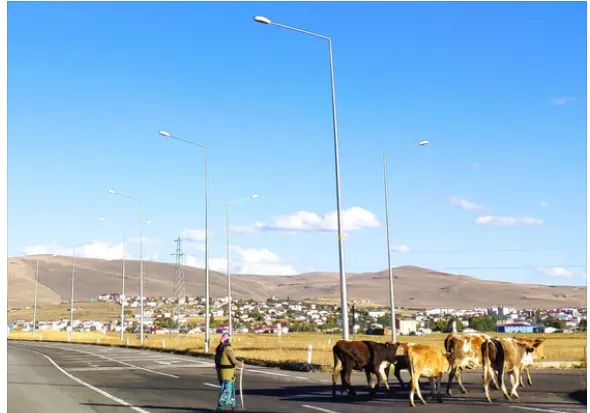
Animal herder on the road in eastern Turkey [JOEL DOWN]
Reeling from the experience, I realized how important it is to bend your own rules. With a route of this length, reason dictates that you should play it safe. Stick to the path. Take that bus. Get there fast. But five hours in a stranger’s lorry had reminded me that the best travel days are the ones you leave to chance.
The detour around Russia
I said goodbye to Nils in the Georgian seaside resort town of Batumi, just across the border from Hopa. Batumi is something of Georgia’s answer to Las Vegas or Dubai, with hotels, skyscrapers and no fewer than 10 luxury casinos — much of it paid for by $5.5 billion in foreign investment.
In Batumi, I boarded an electrified train for Tbilisi, the capital of Georgia. Now on safer ground and heading inland, I enjoyed the occasional glimpse of snowcapped mountains in the distance, the bucolic foreground of gardens, cottages and farmland, and train stations.
Few cities can wrong-foot you like Tbilisi. Even taking the metro keeps you on your toes: The vintage escalator travels so fast and at such a steep angle, it’s actually scary the first time you take it. A Soviet-era innovation, the stations — opened in 1966 — were sunk deep into the earth to save as many lives as possible in the event of a nuclear attack.
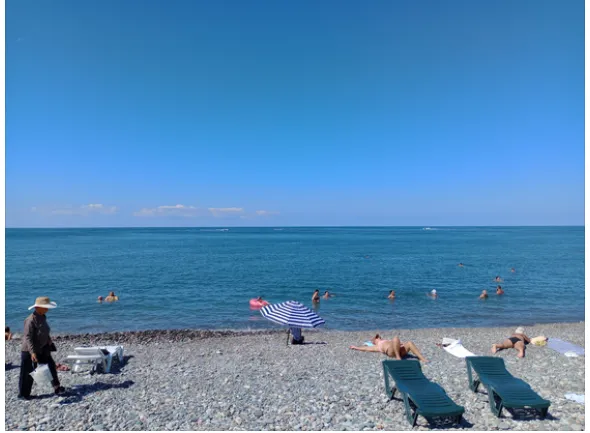
Beach at the resort town of Batumi, Georgia [JOEL DOWN]
It was in Tbilisi that the hour of my flight arrived.
I was to fly from Georgia to Uzbekistan over the Caspian Sea, which lies at the center of a red zone for travel. Passing it means crossing Iran to the south, Russia to the north, or, for the safest option, Azerbaijan in the middle. Unfortunately, Azerbaijan’s land borders have been closed since 2020, ostensibly to combat Covid-19, though theories abound as to other reasons behind the border closure.
Taking a plane at this juncture was sensible, though it didn’t stop me from feeling guilty. It is a very different experience to stare out of a plane window and guess at what lies between the folds of a mountain than to pass through that mountain and see shrubs shooting up from the cracked soil, or people gathering outside a tavern and to say with certainty how this place differs from the last.
After a roughly three-hour flight, I landed in Tashkent, the capital and largest city of Uzbekistan, where passport control looked like a turnstile at a World Cup game. Surveying a tide of people jostling for a foothold in the queue, I saw straw hats, giant beards, the glint of gold teeth and a daughter pulling her elderly father through the crowd.
The luxury Silk Road
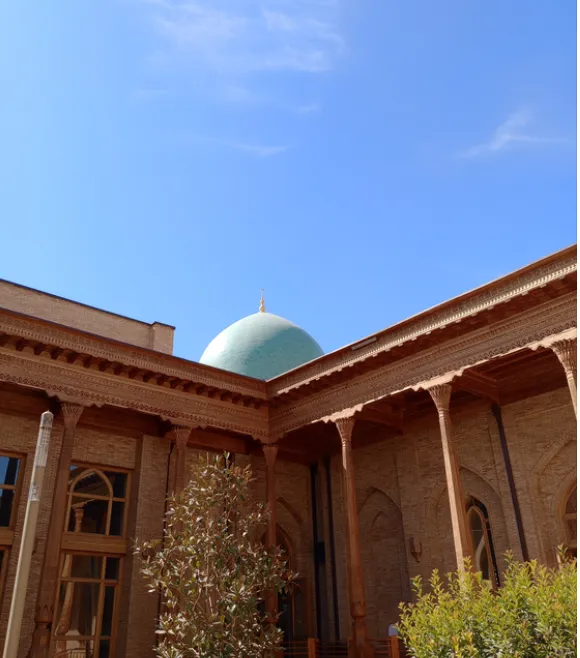
The city waiting for me on the other side bore no resemblance to this chaos. Tashkent is orderly and clean, where people respect personal space and volunteer groups quietly sweep parks, preserving the city’s immaculate appearance. I had just one day here, which I dedicated to the city’s Minor Mosque, a beautiful piece of traditional Central Asian architecture — albeit a recent one that opened only in 2014.
Turquoise dome in Tashkent, Uzbekistan [JOEL DOWN]
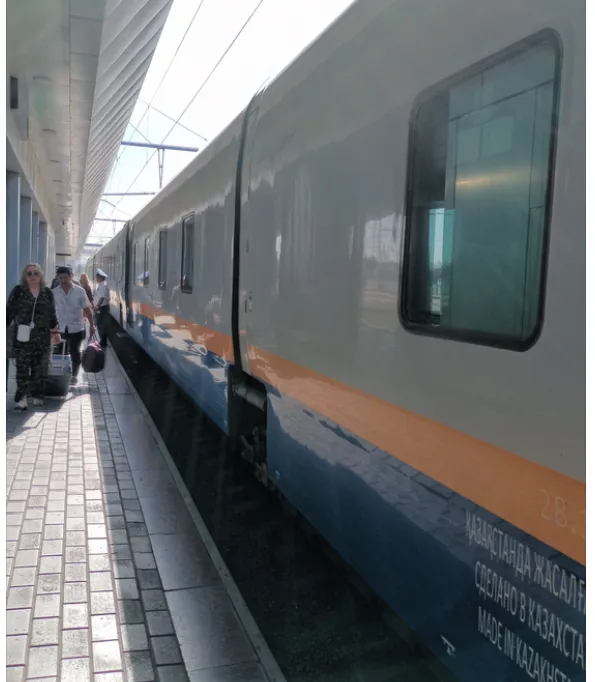
Later that evening, I caught the Talgo Express from Tashkent to Almaty, Kazakhstan’s biggest city and commercial capital, a deluxe sleeper service that delivers on comfort. Unlike the other sleepers, it retained a stable heat at night, cocooned from the desert chill outside. If the Dogu Express had offered stunning views, and its cousin, the Bosphorus, felt like a party on wheels — this was the VIP experience. Think of it as the Silk Road with concierge service.
It felt good to be back in my element, watching a radiant sunrise extend over the Kazakh steppe. Wild horses grazed, and there was not a human in sight.
The Silk Road once threaded through Uzbekistan and Kazakhstan, giving them a stake in one of the most successful trade routes in history. These days, Uzbekistan is a renowned exporter of cotton and sheep’s wool, while Kazakhstan has built its fortunes on oil and other natural resources. And yet, the country’s wildernesses may represent its strongest resource for the future.
The steppe is characterized by limited rainfall, native grassland plains and some unusual wildlife. Endangered eagles guard the skies, while rodent species like gerbils and voles provide them with coveted prey. You would be forgiven for thinking there’s not much going on out here, as it can look like a scene from a Western movie, helped along by the wild horses and the odd Stetson-hat mountain. But what you’re really looking at is an absence of crowds and settlements, not an absence of life.
A carriage on the Talgo Express, Kazakhstan [JOEL DOWN]
A century ago, when roughly 90 percent of the Kazakh Steppe was under cultivation, this could have been a very different story.
Chinese whirlwind
From Almaty, I caught the first bus bound for China and braced for a difficult crossing into Xinjiang, the country’s far western province.
Xinjiang is not a common gateway for foreigners entering China due to stringent surveillance and security — tensions between the restive region’s largely Muslim, Turkic-speaking Uyghurs, Han Chinese residents and the Chinese government sometimes boil over into acts of terrorism and violence.
Nevertheless, the process was much simpler than I expected — a swab test, a few extra questions and no interest whatsoever in my devices.
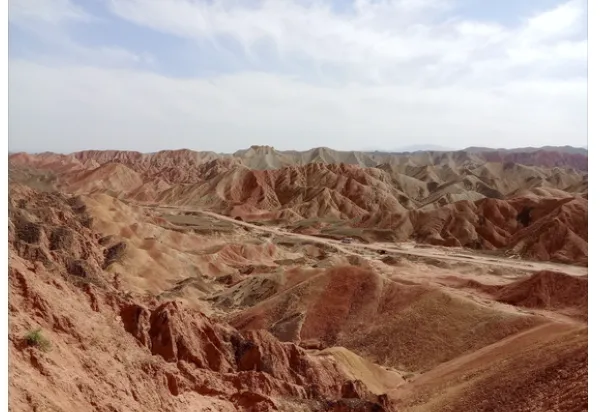
The Rainbow Mountains of Zhangye National Geopark, China [JOEL DOWN]
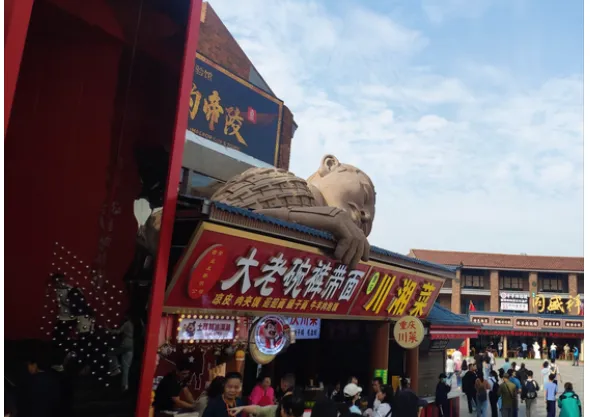
Then came the culture shock. Even a “small” city like Yining in the far west offers a complete sensory overload. Tiny mopeds scrape the asphalt, followed by taxis, three-wheeled pickups and mobile food stalls. The smell of Sichuan pepper and the image of a woman plucking a duck by the roadside loom large in my memory.
I was a world away from Europe’s grotty hostels, retiring to rooms that cost the same but came with TVs and en-suites. The exception was an ancient hotel in Zhangye where a poster of Chairman Mao peered over the receptionist’s shoulder. Even the bellboy was well past his prime. He wore military overalls with a cap that hid his graying hair.
My twelve days in China flew by in a whirlwind of sights, history and noodles, slowed only by technical difficulties worsened by a lost cash card.
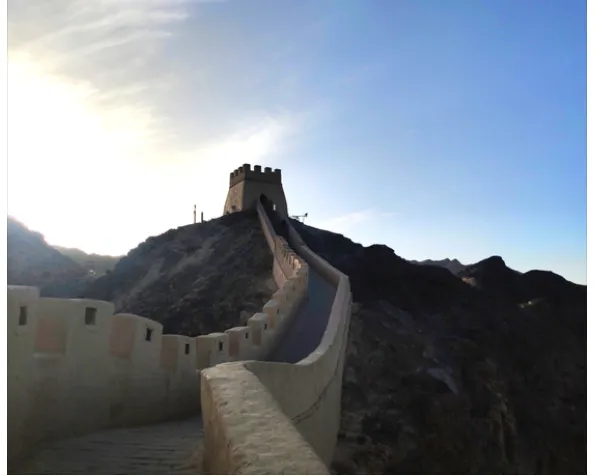
I wandered the Rainbow Mountains of Danxia, made a breathless ascent to the end of the Great Wall and was mostly stunned by how well China’s rail network operates. The sleek trains are rarely, if ever, late; overseen by tense wardens who shout instructions through a microphone at the throngs of people waiting to board. We hurtled past deserts, pink and white cotton fields and — confusingly — hills that looked like the Scottish highlands.
The end of the Great Wall at Jiayuguan [JOEL DOWN]
Not every train was an aerodynamic rocket. There was the one that chugged through the Gobi Desert, where passengers knocked elbows, and sunflower husks lay abandoned on silver trays. It was a “green-skinned” train, the slow, no-frills locomotives prevalent in many communist nations in the 20th Century.
I carried on to Xi’an, a pulsating megacity at China’s core. National flags stick out in the entrance of every store — I even saw one being carried off by a thief — while the Terracotta Warrior site east of the city stands as a powerful touchstone to the nation’s past. A staggering 700,000 people contributed to the construction of the mausoleum.
Xi’an was overwhelming, but it convinced me that there was so much more to see. Boarding one last high-speed train with the colors of a flame painted onto its flank, I almost wished I could carry on forever.
Instead, I arrived in Qingdao, an important port city in China’s northeast, just across the Yellow Sea from Korea. With nowhere affordable to go, I booked into one last hostel that restored my faith in the entire concept. This was thanks to the guests, from a marketing student who began our conversation with a bright “Good morning, sir!” to an estate agent, who introduced me to vegetable bao, or steamed buns. Just as I began to mourn the transitory nature of these friendships, Qingdao was engulfed in a mighty thunderstorm.
Terracota warrior guards an ice cream stand in Xi'an, China [JOEL DOWN]
Qingdao has a storied past. In 1897, it was ceded to Germany, whose imprint can be seen in the city’s historic architecture and, most notably, in its iconic Tsingtao Beer. In World War I, Imperial Japan took it after a siege by Japanese and British forces. It was returned to China in 1922, but was reoccupied by Japan in 1938, before being returned to China again after Japan’s defeat in World War II in 1945.
The city is now famous for a recurring event. Every night, people gather on the waterfront to watch the Qingdao Fushan Bay light show, when colorful patterns dance across a million synchronized LED lights that cover over 200 of the city’s skyscrapers.
Finally, Korea
I was to see these lights again as I stood on the deck of the ferry to Incheon, Korea, looking back toward mainland China. The storm that turned Qingdao into an apocalyptic ghost city had subsided, leaving a calm glow that slowly slipped out of view.
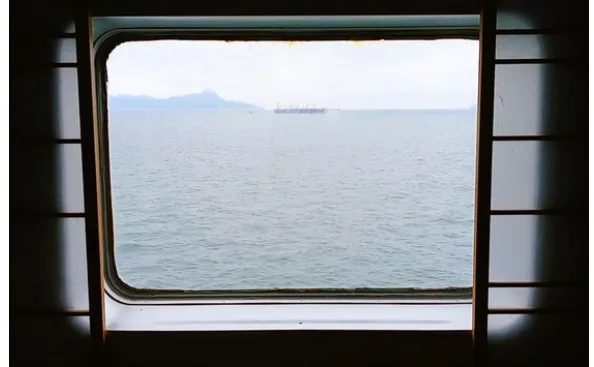
Sailing three times weekly, the ferry to Incheon has a convenience store, sliding-screen portholes and a small cinema. For approximately $80, I considered it money well spent.
View out the cabin window on the ferry to Incheon [JOEL DOWN]
When the ship docked in Incheon the next day, I paused at the terminal, processing the last 8,900 kilometers. The idea had always been a little unhinged, but it had cut my carbon footprint by around 59 percent. Now came the harder part: Adjusting to a new culture, finding a job, getting a visa and learning the language.
In those moments of stress, I’d find comfort in the memories of my adventure. Watching shepherds guide their herd across a remote Turkish moor. Seeing a crag martin whirl around my head at the top of a Montenegrin mountain. Connecting with strangers, as volcanic rock faces passed us by.
They were proof enough that the journey had been worth it.
Reference Written by JOEL DOWN [kjdculture@joongang.co.kr] Provided by Korea JoongAng Daily
※ Picks respects the rights of all copyright holders. If you do wish to make material edits, you will need to run them by the copyright holder for approval.
more from
KoreaJoongAngDaily
KoreaJoongAngDaily
'Sandwiched generation' working longer, borrowing more as family and societal support fail
2026-05-13 00:00:00
KoreaJoongAngDaily
From reusables to recycling, Seoul gets serious on reducing waste
2026-05-11 00:00:00
KoreaJoongAngDaily
Bingsu for one: Retailers role out small-portion food products as inflation fuels 'micro consumption'
2026-05-10 00:00:00
KoreaJoongAngDaily
'Triple burden': Report shows grandmothers support husbands, grandchildren and children
2026-05-09 00:00:00
BEST STORIES
KoreaJoongAngDaily
New Yorker dives into Jeju tradition as village's foreign 'haenyeo'
2026-05-07 00:00:00
Knowable Magazine
Evolution of snakes: Scientists unravel the mysssteries
2026-05-07 00:00:00
Travie
Play Baseball, Meet Cats: Jeju's Wildest New Theme Parks Are Open
2026-05-10 00:00:00
Inven Global
Will an 'AI Bill' Bomb Explode? KRAFTON Warns Against Indiscriminate Tech Adoption
2026-05-10 00:00:00
Travel
KoreaJoongAngDaily
Cycling Korea: Circumnavigating volcanic island of Jeju offers spectacular scenery with plenty of wind
2026-05-02 00:00:00
KoreaJoongAngDaily
Where kings once wandered: A moonlight tour of Changdeok Palace
2026-04-15 00:00:00
KoreaJoongAngDaily
Tickets for traditional fire art performance sells out in under a minute
2026-04-06 00:00:00
KoreaJoongAngDaily
Mud, masks and riverside magnificence: Gov't desginates 'global festivals' in pursuit of 30 million tourists
 Changing trains in the town of Modane in the French Alps [JOEL DOWN]