The best books about being a teenager - according to our experts
by The Conversation
DavideAngelini/Shutterstock
Awkwardness and acne are the first things that spring to mind when thinking of adolescence, but they’re not always the full picture. We asked eight of our experts to tell us which book they feel best represents the experience of being a teenager.
1. Natives by Akala
In this biographical polemic, Natives, Akala captures the experience of being a teenager as a time when young people begin to recognise the social injustices shaping the worlds they inhabit.
John Murray Publishers Ltd
Akala reflects on his teenage years as a period of awakening. Experiences at school, encounters with authority, and immersion in music and culture all contributed to the formation of his own identity. For many teenagers, it is during these formative years that individual experiences become connected to wider social structures and for all too many teenagers, the limits placed upon them.
Akala conveys the confusion and anger that can arise when adolescents realise that society is not fair, particularly for those from minority backgrounds. His honest discussion of education, policing, and representation highlights how adolescence can be both challenging and simply unfair. At the same time, the book shows teenage years as a period of growth and empowerment. It demonstrates how young people develop their voice, values and sense of purpose as they wake up to living in 21st-century Britain.
Michael Amess is an assistant professor of secondary teacher education
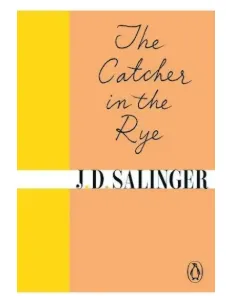
2. The Catcher in the Rye by J.D. Salinger
The Catcher in the Rye remains one of the most enduringly accurate portrayals of teenage experience. It captures adolescence as a period of emotional turbulence, identity confusion and profound vulnerability.
This book exposes the internal contradictions many teenagers live with, including wanting independence yet fearing loneliness and craving authenticity while feeling alienated from the adult world. The book’s cynicism, intensity and sensitivity reflect the psychological push and pull that characterises adolescent development, especially as young people grapple with grief about the potential loss of childhood and its perceived safety or simplicity, transition and the pressure to be an adult before they feel ready. Penguin Books
What makes the novel resonate is how familiar the book’s internal perspectives still feel through the hyper-awareness, sense of injustice and longing for connection which mirrors what many teenagers struggle to articulate. The book captures not just the behaviours of adolescence, but the interior world behind them. This makes the novel a timeless exploration of what it feels like to stand in the liminal space between childhood and adulthood.
Sophie King-Hill is an associate professor specialising in sexual behaviours and assessment in children and young people
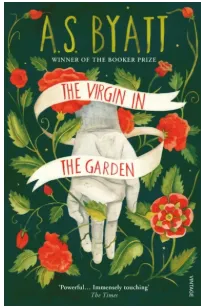
Penguin Random House Frederica Potter has no friends. She is arrogant, academically competitive, dismissive of teenage preoccupations as beneath contempt, and generally spiky. She’s unable to resist an argument, even when it goes against her own interests. She is often irrationally angry. Unashamedly cerebral, she is physically awkward and socially inept, picking up social cues late, if at all.
She repeatedly gets into sexual entanglements with older men, mainly because she has no idea how to avoid these, submitting to their fumblings out of both curiosity and embarrassment – though she does, eventually, lose her burdensome virginity to someone sympathetic.
By the end, Frederica herself may not have learned much, but readers have been given a dispassionate portrait of a complex adolescent.
Carrie Paechter is a professor emerita of childhood, youth and family life
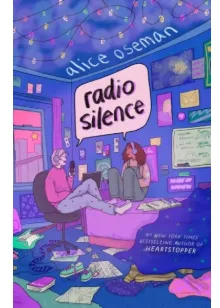
4. Radio Silence by Alice Oseman
Alice Oseman’s Radio Silence is a searing critique of the UK’s academic pressure cooker. While the creator of Netflix’s Heartstopper is famed for romance, this novel explores the hollow reality of being a study machine. For current further and higher education students, the protagonist Frances’ experiences reflect their real exhaustion within a system prioritising metrics over personhood.
Harper Fire
Frances and her friend Aled find refuge from the mundane by collaborating on a viral, anonymous podcast, Universe City, featuring Frances’s digital art. This perfectly captures the modern teenage duality: performing academic compliance while seeking authentic identity in digital subcultures.
Frances and Aled’s fear that attending university is the only valid future mirrors the prescribed routes many students navigate. Radio Silence serves as a blueprint for reclaiming agency, valuing the essential, durable skills like critical literacy and voice that define the teenage experience today.
Joanne Bowser-Angermann specialises in post-16 English and resits
5. The Bell Jar by Sylvia Plath
Sylvia Plath’s 1963 account of a straight-A student’s descent into mental illness has been subject to an autobiographical critical lens that has often overlooked the more universal aspects of this coming-of-age narrative.
OM Books International
While most teenagers do not experience the extreme distress or invasive psychological therapies that heroine Esther Greenwood is subject to, her profound sense of alienation and detachment from conventional social goals is familiar teen territory. Like many young women today, Esther suffers from impostor syndrome. Coupling this is the dawning realisation that her intellectual and career success may be less valued than conforming to social beauty standards and “achieving” marriage and motherhood.
Esther is not a likeable character. She displays a lack of empathy and a tendency to judge others harshly. Yet, her psychological disintegration and rehabilitation arc marks her pathway to maturation through the rejection of prescribed values and the development of a more socially-aware and independently-minded adult character.
Roberta Garrett is a senior lecturer in creative writing
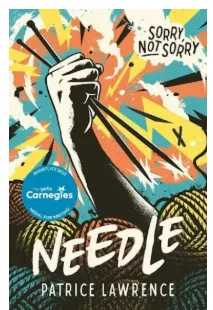
6. Needle by Patrice Lawrence
Patrice Lawrence’s Needle highlights a largely neglected group of teenagers in literature: teenage girls in care. The protagonist Charlene is multifaceted and complex, and Lawrence achieves the difficult task of making a frequently unlikable character sympathetic.Barrington Stoke
Charlene experiences being separated from her younger sister, having her creative work deliberately destroyed by her older foster brother, and the day-to-day microaggressions and racism that many Black people (especially teenagers) have to bear.
From a lesser author, Charlene would learn to deal with these acts of violence with grace. However, Lawrence understands that a day-by-day, drip-by-drip destruction of what matters to a teenager is much more likely to lead to rage. Charlene never conforms to what systems (such as the care system, prison system and educational system) expect from her. She often does exactly the opposite of what they require. But she keeps her sense of self, and this makes Needle’s Charlene a hero worth reading about.
Karen Sands-O'Connor is an expert on Black British children’s literature
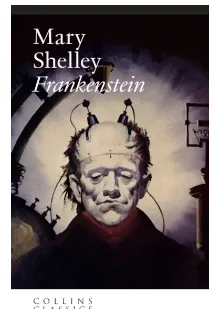
7. Frankenstein by Mary Shelley
Famously, Mary Shelley started writing the novel Frankenstein when she herself was still a teenager.
William Collins
She demonstrates a sense of adolescent ambivalence by dedicating the novel to her father on one page, but then using Adam’s complaint to God in Milton’s Paradise Lost as an epigraph. “Did I request thee, Maker, from my clay / To mould me man? Did I solicit thee / From darkness to promote me?”
Shelley tells the story of Victor Frankenstein, not the mad doctor of later adaptations, but a cocky undergraduate – a teenager – mansplaining science to his tutors.
Driven by grief and ambition to create new life, Victor makes a monster: a baby in adult form; in other words, a teenager. Some readers, both then and now, might identify with Frankenstein’s monster; angry, articulate, capable of gentleness and cruelty. Readers tend to find Victor whiny and unsympathetic, perhaps because his combination of vulnerability and monstrosity reminds us of our own teenage years.
Andrew McInnes is a reader in romanticisms
8. Carrie by Stephen King
Stephen King’s first novel, Carrie, is a horror tale that explores the teenage experience in an unconventional way.Hodder Paperback
In the school locker room, Carrie’s first period arrives publicly and unexpectedly, causing the other girls to shout in disgust and throw sanitary products at her. Carrie’s body violates social convention by making public a process that, at the time, was considered shameful. As a result, her relationships with her peers are adversely affected because she is labelled “other”. The main character is bullied because she has body odour and acne, menstruates publicly, and has a complicated relationship with her mother.
By attending the school prom, Carrie thinks she will finally be accepted, but that is not the case. She exercises her telekinetic ability in an act of revenge against her mother, her peers and her hometown. King uses this novel to explore the unpleasant and awkward experience of female adolescence.
Ailish Brassil is a PhD candidate in English literature researching girlhood fictions and domestic horror
Which book do you think best portrays the experience of being a teenager? Let us know in the comments below.
This article features references to books that have been included for editorial reasons, and may contain links to bookshop.org. If you click on one of the links and go on to buy something from bookshop.org The Conversation UK may earn a commission.
※ Picks respects the rights of all copyright holders. If you do wish to make material edits, you will need to run them by the copyright holder for approval.
more from
The Conversation
The Conversation
Don’t just plant trees, plant forests to restore biodiversity for the future
2026-04-24 00:00:00
The Conversation
We designed the turf for soccer’s biggest World Cup ever – here’s how we created the same playing experience across 3 countries
2026-04-23 00:00:00
The Conversation
Your local fishing hole is getting browner, changing which fish species thrive and which ones struggle
2026-04-23 00:00:00
The Conversation
Will oil prices ever truly go back to ‘normal’?
2026-04-23 00:00:00
BEST STORIES
KoreaJoongAngDaily
Warmer weather in Korea has diners spilling into the streets for 'yajang'
2026-04-17 00:00:00
Travie
Thailand's World's Biggest Songkran Festival 2026 Announced
2026-04-20 00:00:00
The19th
Should you try cold plunging?
2026-04-21 00:00:00
HapsKoreaMagazine
BTS in Busan: Everything You Need to Know About the ‘ARIRANG’ World Tour Concerts
2026-04-22 00:00:00
Lifestyle
The Conversation
6 ways your smartwatch is lying to you, according to science
2026-04-23 00:00:00
The Conversation
Are aliens real? Scientists have been hunting for extraterrestrial life since the time of Aristotle
2026-04-22 00:00:00
The Conversation
Is reading your favourite hobby? A new era of book clubs is reshaping how we read
2026-04-21 00:00:00
The Conversation
Electric vehicles pass tipping point, breaking the link with oil prices
 DavideAngelini/Shutterstock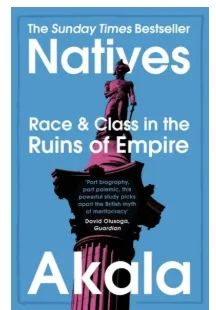


 Reference