City animals act in the same brazen ways around the world
by The Conversation
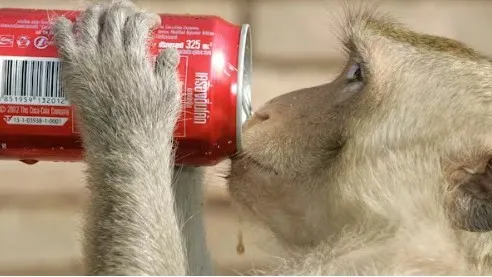
A monkey swipes a soda in Thailand. Saeed Khan/AFP via Getty Images
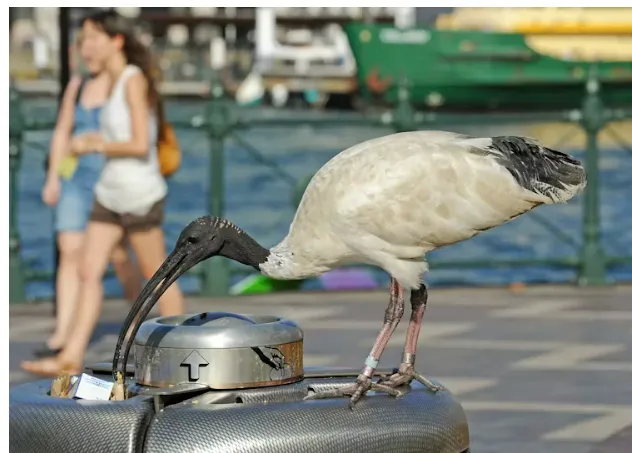
The urban monkeys in New Delhi are so bold they’ll steal the lunch right off your plate. If you’ve spent time in New York, you’ve probably seen squirrels try to do the same. Sydney’s white ibises got the nickname “bin chickens” for stealing trash and sandwiches.
This brazen behavior isn’t normal for most species in the countryside, yet it shows up in urban wildlife, and not just in these cities.
Studies show that animals living in urban environments around the world exhibit common sets of behaviors. At the same time, these urban animals are losing traits they would need in the wild. This process of urban animals’ behavior becoming more similar is known as “behavioral homogenization,” and it accompanies the loss of species diversity with urbanization.
Squirrels in New York’s Central Park have no qualms about rifling through your belongings and stealing your food. Keystone/Getty Images
Cities, despite their local differences, share many of the same features worldwide: They are warmer than the surrounding countryside, noisy, polluted by light and, most importantly, dominated by people.
Cities drive evolution as well. Humans and the changes we’ve brought to cities have led to the survival of bolder animals, and those bolder animals pass on their traits to future generations. In genetics, scientists refer to this as the environment “selecting” for those traits.
It’s not just sandwich-stealing that is more common among city wildlife; urban birds also sound more alike.
Why? Cities are loud and filled with traffic noise, so those who can effectively communicate in that environment are more likely to survive and pass on those traits.
Animals may behave similarly in cities because they learn from each other how to exploit novel human food sources. For instance, the cockatoos in Sydney have learned to open trash bins. In Toronto, the raccoons are in a race to outwit humans as urban wildlife managers try to design animal-proof trash bins.
The buildings and bridges in cities become home to bats, birds, and other urban dwellers, at the cost of learning to use more natural nesting sites. Roads and culverts modify how and where animals move.
While rural animals may forage at a variety of places and eat a variety of foods, urban animals may concentrate on garbage bins or rubbish dumps where they know they can find food, but they end up eating a potentially unhealthy diet.
Consequences of similar behaviors
The loss of behavioral diversity is happening everywhere that humans increase their footprint on nature. This is worrisome on several levels.
At the population level, behavioral variation may reflect genetic variation. Genetic variation gives species the ability to respond to future environmental change. For example, for animals that have evolved to breed at a specific time of the year, urban heat islands can select for earlier breeding.
Reducing genetic variation leaves populations less able to respond to future changes. In that sense, having genetic variation resembles a diversified investment portfolio: Spreading risk across a variety of stocks and bonds lowers the risk that a single shock will wipe out everything.
An ibis picks through a trash bin in Sydney. Greg Wood/AFP via Getty Images
Moreover, as animals become tamer, new conflicts between animals and humans may emerge. For instance, there may be more car crashes, animal bites, property damage and zoonotic disease transmission. Such conflicts cost money and may harm both the animals and humans.
Losing behavioral diversity is also troubling for conservation.
When a species loses behavioral diversity, it loses resilience against future environmental change in the wild, making reintroducing urban animals to the wild harder.
Losing behavioral diversity also risks erasing socially learned, population-specific behaviors, such as local migration routes, foraging techniques, tool-use traditions or vocal dialects.
For example, Australia’s regent honeyeater populations have been shrinking and are critically endangered. The isolation of having fewer of their own species around has disrupted normal song-learning behavior, making it harder for male birds to sing attractive songs that help them find mates and breed successfully.
Ultimately, behavioral homogenization is making wildlife in cities such as Los Angeles, Lima, Lagos and Lahore behave in similar ways despite living in different environments and having different evolutionary histories.
Many of these behaviors influence survival and reproduction, so understanding this form of diversity loss is important for successful wildlife conservation, as well as future urban planning.
※ Picks respects the rights of all copyright holders. If you do wish to make material edits, you will need to run them by the copyright holder for approval.
more from
The Conversation
The Conversation
Massive eye drop recall reflects ongoing issues with manufacturing and FDA inspection
2026-04-12 00:00:00
The Conversation
New research shows how forests can prevent floods of all sizes
2026-04-12 00:00:00
The Conversation
Water conservation works, but climate change is outpacing it: Phoenix, Denver and Las Vegas offer a glimpse of the future
2026-04-11 00:00:00
The Conversation
Health insurance jargon can be frustrating and confusing - here's how to navigate it
2026-04-11 00:00:00
BEST STORIES
Knowable Magazine
What's the secret to a great cup of tea?
2026-04-10 00:00:00
Travie
Best Places to Visit in Miyazaki: Myth, Nature and Shochu Experiences
2026-04-07 00:00:00
Street Food Guy
Struggling to Find Reliable Peptide Wholesale Suppliers Try This Solution Approach
2026-04-07 00:00:00
AllblancTV
Let's Try 30-Second Stretch for Instant Lower Back Relief
2026-04-09 00:00:00
Environment
The Conversation
Can you survive inside a tornado? This scientist did by accident – he's lucky to be alive
2026-04-09 00:00:00
The Conversation
Handpumps bring water to rural African communities, but many are broken - study models how best to maintain them
2026-04-09 00:00:00
The Conversation
Hormuz closure threatens the global food supply-why grocery price hikes are coming
2026-04-09 00:00:00
The Conversation
Mosquitoes carrying malaria are evolving more quickly than insecticides can kill them - researchers pinpoint how
 A monkey swipes a soda in Thailand. Saeed Khan/AFP via Getty Images