Pets & their People explores the long, strange history of human‑animal companionship
by The Conversation
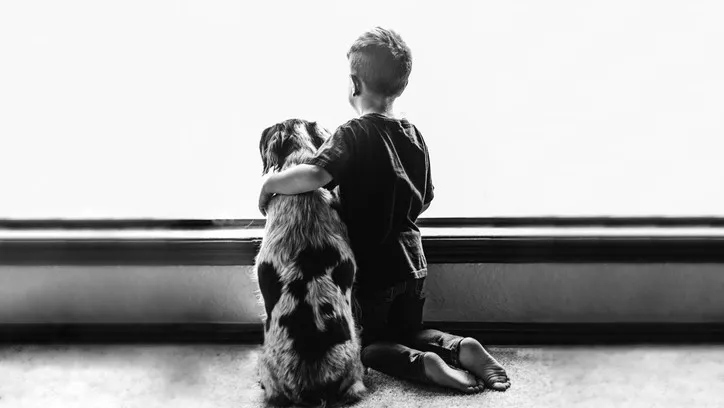
A postcard from the collection of Tom Phillips, on show in the exhibition. Bodleian Libraries University of Oxford
Pets play an important role in many people’s lives. In the UK, six out of ten households have at least one pet, dogs being our most common companions (assuming we don’t count fish individually). But it isn’t easy to be precise.
The 2025 figure of 13.5 million pet dogs has recently been bumped up to correct for a significant undercounting in previous UK estimates. This compares with around 11 million pet cats, although there are similar problems in trying to count these ungovernable beasts and their stray cousins.
Another point of debate is why we have these relationships at all. What motivates pet owners – and when did we start the process of turning wild animals into the “fur babies” of the family?
Equally importantly, what’s in it for the animals? Were their wild ancestors lured in by the promise of a warm fire, perhaps on some kind of contract to kill mice or protect sheep? Or did they purposefully inveigle themselves into our homes and affections to offer companionship, comfort, even therapy?
All these questions are raised by a wonderful new exhibition, Pets & their People, in Oxford’s Bodleian Library.
Pets and people
The exhibition is curated by Charles Foster, who is a noted naturalist but otherwise pleasingly difficult to pigeonhole. As the author of both Being a Beast (2016) and Being a Human (2022), Foster’s intention has long been to show how those statuses are inseparable.
In his work, Foster suggests that far back in our human history, shamans and other spiritual figures attempted to enter the lifeworlds of other animals. But then, as hunter-gatherers gave way to Neolithic farmers, people came to imagine themselves as members of a distinct species – lonely lords of creation.
Medieval Ashmole Bestiary illumination of Adam naming the creatures of Earth. Bodleian Libraries University of Oxford
There is a glorious image on display from the Ashmole Bestiary (an illuminated 13th-century manuscript containing descriptions of real and mythical animals) of Adam giving names to the animals. This image exemplifies, for Foster, human power and privilege, with these newly christened critters placed in their separate enclosures – cages that would contain them hereafter.
Pets, this exhibition suggests, similarly aided human beings in the achievement of selfhood, even if the distinctiveness of humans from beasts is always tested and troubled, now just as much as in the distant past.
The power of human beings to shape pets for their variously selfish reasons is acknowledged. The show explores the results of breeding in brachycephalic snouts and other defects to best-in-breed winners.
On the theme of mixing and muddling, we are also reminded of companion animals being thoroughly anthropomorphised, and of humans being transformed as if in sympathy into beasts.
One example is poet Philip Larkin’s doodle of himself as a rabbit ensconced in a chintzy armchair, extremely Larkin-esquely watching snooker on cable TV with a measure of spirits to hand. The pets of authors Raymond Chandler and Patricia Highsmith unexpectedly get a look in too, alongside the more familiar examples of Lord Byron’s Boatswain (a Newfoundland dog) and poet Christopher Smart’s Jeoffry (a cat).
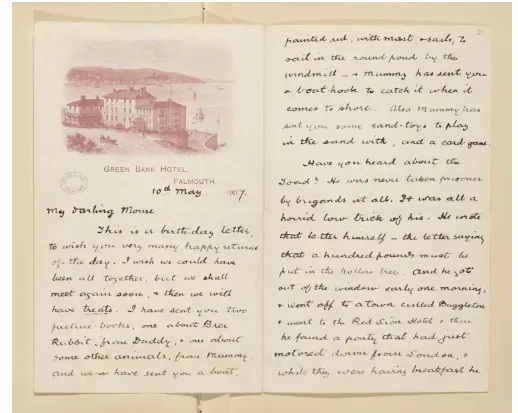
A page from Wind in the Willows on display in the exhibition. MS Eng Misc d fols v r / Bodleian Libraries University of Oxford
Nineteenth-century photographic calling cards, or cartes de visite, remind visitors that when asked to display ourselves (now on social media, dating sites, even on Zoom calls), many of us hold up our pets to the camera – which is to say, pets are us.
The age of selfies only confirms this long history of entanglement. The idea is that (a little like Larkin) we lean on our pets to tell stories about ourselves.
Virtual pets like Tamagotchis or the current fad for robot pets seem harder to explain, and pet rocks even more so (there is a specimen on show, a triumph of 1970s marketing chutzpah). But the emphasis is on our millennia-long lockstep with nonhuman animals.
Pets, ancient and modern
Visitors are encouraged to think that love for pets and grief at their loss are the same, whether we are considering ancient Egypt or early modern England.
The argument that the concept of “pets” is a more recent phenomenon (I’ve contributed to this idea with my research) is a fainter refrain. But there are still plenty of surprises in this exhibition to back up its stress on continuities.
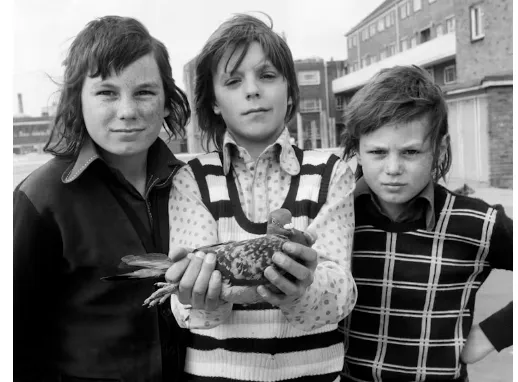
John Payne aged 12, with friends and his pigeon Chequer, in Portsmouth. Courtesy Daniel Meadows and Bodleian Libraries University of Oxford
Two extraordinary papyri records for the purchase of dog bowls make the point. There are other instances of commercial opportunism on display – from the production of mummified cats in ancient Egypt to the advent of the pet industry in our day. The lesson is that animal companions break the bank as well as break our hearts.
However, what pets are and what they mean is still a puzzle for researchers – we don’t even have an accepted definition of pet. While the term “companion animal” doesn’t have much poetry about it, scholars tend to use this more neutral language to account for the variety of relationships people have had with animals, over the course of thousands of years and in innumerably different cultures.
Researchers don’t know quite why some of us love pets and some of us don’t. Or why love for pets is sanctioned at times and denounced at others. Still, this exhibition reminds us that head-wrangling questions are more satisfying than rote answers. Perhaps being human is indeed about looking at our pets and asking what separates us from them.
Reference Written by Philip Howell Provided by The Conversation
※ Picks respects the rights of all copyright holders. If you do wish to make material edits, you will need to run them by the copyright holder for approval.
more from
The Conversation
The Conversation
I watched Artemis II lift off - and witnessed the first humans venture to the Moon since 1972
2026-04-08 00:00:00
The Conversation
Home or away? Why planning a sustainable holiday is about more than swapping planes for trains
2026-04-07 00:00:00
The Conversation
Humans’ closest invertebrate ancestors date back much further than thought – how we discovered the fossils that show this
2026-04-07 00:00:00
The Conversation
Winter crops need to be sown ‑ but Australia’s farmers are worried about fertilisers and fuel
2026-04-07 00:00:00
BEST STORIES
Street Food Guy
How to Build a Balanced Plate Without Counting Anything
2026-04-01 00:00:00
Mindswitch
Music to Accompany the City's Day
2026-04-01 00:00:00
Inven Global
2026 First Stand Tournament: Gen.G, G2, and 6 Teams Head to Brazil for Riot’s First International Event of the Season
2026-04-03 00:00:00
AllblancTV
Try This 5MIN Squat Variation Challenge🔥
2026-04-02 00:00:00
Lifestyle
The Conversation
I hate it when other adults 'parent' my kids. What can I do?
2026-04-05 00:00:00
The Conversation
Why has it taken so long to return to the Moon?
2026-04-03 00:00:00
The Conversation
It's not just gen Z - older adults need help spotting online misinformation too
2026-04-02 00:00:00
The Conversation
Airlines are facing yet more turbulence - expert assesses what they need to get through it
 A postcard from the collection of Tom Phillips, on show in the exhibition. Bodleian Libraries University of Oxford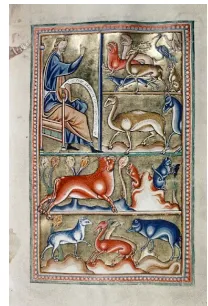
 Reference