AI makes rewilding look tame - and misses its messy reality
by The Conversation
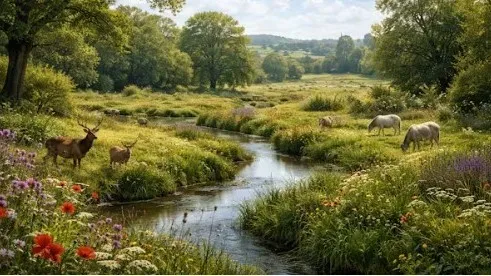
‘Create an image of what rewilding in England looks like’, according to ChatGPT. Image generated by The Conversation using ChatGPT., CC BY-SA
Humans have always imagined the natural world. From Ice Age cave paintings to the modern day, we depict the animals and landscapes we value – and ignore those we don’t.
Now artificial intelligence is doing the imagining for us. And when asked to picture “rewilded” Britain, it produces landscapes that are strikingly similar – and tame.
Two geographers at the University of Aberdeen recently did exactly this. In their research they present examples of how widely used AI chatbots (Gemini, ChatGPT and others) generated images of rewilded landscapes in the UK. The bots were prompted with commands such as “Can you produce an image of what rewilding in Scotland looks like?” or “Create an image of what rewilding in England looks like”, tailored to each bot’s style.
The authors recognise that the commands are very general, but that gives the bots free rein. The images generated were then compared using both the composition (for example point of view, scale, lighting) and content (what is in the picture and what is not, primarily the habitat types, species or humans).
A landscape without risk
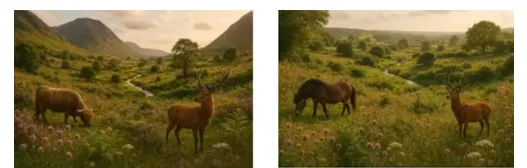
The AI rewilded landscapes were all very similar, all but one featuring distant hills, grading politely to a valley foreground of open meadow or heath with a stream or pool. A golden light plays across the scenes, illuminating foreground flowers. Ponies and deer feature routinely, plus the occasional Highland cow. Perhaps unsurprisingly there were no humans, nor any human presence shown by buildings or other artefacts.
Images generated by the Aberdeen researchers using ChatGPT of rewilding in Scotland (left) and England (right). Note the similarity to the image generated by The Conversation using the same prompt (at the top of this article). Wartmann & Cary / ChatGPT, CC BY-SA
There was also no mess, no decay, no death, no animals likely to provoke a sharp intake of breath. No wolves, lynx, bears or bison, the creatures that routinely haunt the real arguments about rewilding. Copilot’s take on rewilding in Scotland (left) and England (right). Wartmann & Cary / ChatGPT, CC BY-SA
The pictures were achingly dull, polite, as the authors point out “ordered and harmonious bucolic”.
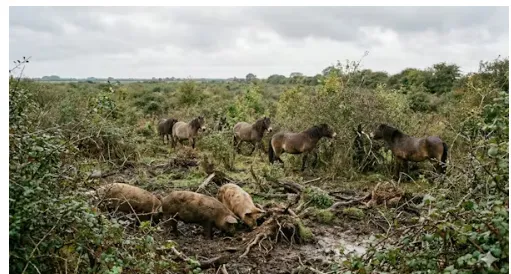
Only experts get the messy version
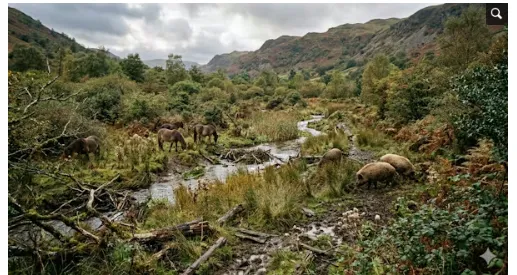
AI really can generate images of ecologically accurate rewilding. This one made with Gemini, for instance, captures the messiness and chaos of a genuinely rewilded British landscape:
Gemini prompt: ‘A hyper-realistic, wide-angle landscape photograph of the British countryside 50 years after a large-scale rewilding project. The scene is defined by 'ecological messiness’ and structural diversity: thickets of thorny scrub like blackthorn and hawthorn transitioning into expanding groves of self-seeded oak and birch. No straight lines or mown grass. The ground is a mosaic of tall tussocky grasses, rotting fallen logs (deadwood), and muddy wallows created by free-roaming herbivores. In the mid-ground, a small herd of Exmoor ponies or Iron Age pigs are rooting through the undergrowth. The vegetation is dense and layered, featuring wild dog rose, brambles, and stands of willow in damp hollows. The lighting is the soft, dampened silver of a British overcast afternoon, highlighting the textures of lichen, moss, and wet leaves. No fences, no roads, no manicured edges—just a complex, tangled, and thriving wild ecosystem.‘ Gemini / The Conversation, CC BY-SA
However, it only does this when given highly specific instructions about species, landscapes, habitat types, and so on. In other words, you need to know what a rewilded landscape should look like in order to get a convincing image of one.
For most users, the result is something else entirely: a lowest common denominator vision of nature.
AI is copying our sanitised vision of the future
The sanitised AI landscapes produced in the recent study are not surprising. The Aberdeen researchers note the models draw inspiration from available sources, including the social media and websites of environmental initiatives and NGOs promoting rewilding such as Cairngorm Connect and Knepp Estate Rewilding. Their visuals often used aerial perspectives, from inaccessible vantage points using drones. Animals tended to be both iconic but also lovable such as beavers or wildcats.
People and our structures such as homes or farm buildings were largely missing. Reptiles, amphibians and invertebrates were notably absent too.
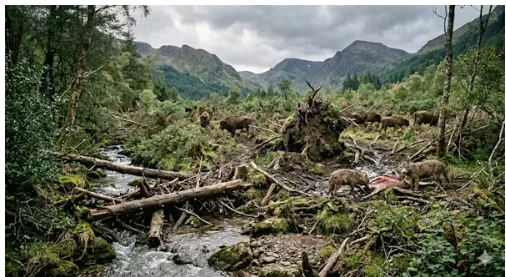
Rewilding images are more accurate when they display natural processes like scavenging or storm damage. (Image generated by The Conversation using Gemini and a detailed prompt). The Conversation / Gemini, CC BY-SA
A particular concern of the authors’ is that the imagery used by the NGOs excludes processes, species and people who might challenge a narrow, conventional view of prettified nature. No wonder the AI was conjuring the sanitised landscapes, although actual rewilding routinely creates landscapes that are an aesthetic challenge, in particular messy, scrubby terrain.
We’ve always argued about what nature should look like
Visual imagery has long had a powerful influence on our view of nature. Wild landscapes in the UK were regarded with disdain by the more genteel classes. The writer Daniel Defoe, in his 1726 travelogue touring throughout Britain, characterised the Lake District as “All Barren and wild, of no use or advantage to man or beast…Unpassable hills…. All the pleasant part of England is at an end”. He wasn’t a fan.
The Romantic movement turned this bias on its head and venerated the sublime or sometimes terrible beauty of the landscape. For example Caspar David Friedrich’s famed painting of 1818, Wanderer above a sea of fog, with a lone adventurer gazing into the distant view of summits and clouds from a crag.
There is a touch of the sublime to the AI landscapes, certainly the viewpoint from on high. However a challenge for rewilding projects is that the resulting landscapes can be distinctly ugly and messy, certainly, neither wistfully pretty nor the dramatic sublime.
The messy reality of a rewilded Britain. (Image generated by The Conversation using Gemini and a detailed 376 word prompt). The Conversation / Gemini, CC BY-SA
Rewilded sites are often scrubby and untidy. This can be on a large scale as natural processes kick in and open habitat scrubs over. Scrub habitat can be superb for wildlife, for example the Knepp Estate credits the regeneration of willow scrub for the return of iconic butterfly the purple emperor. The trouble is that scrub looks untidy and uncared for.
This has become a particularly common criticism of nature recovery projects, especially in urban settings: road verges unmown, weeds in pavements, parks less manicured. Some researchers call it an aesthetic backlash. The AI wildscapes are largely free of scrub which is no surprise because this does not feature much on the image sources the AI drew upon. This is a risk for projects in the real world. If the public comes to expect nature recovery to look neat and picturesque, then the messy reality may be harder to accept.
No scrub, no wolves, no people. AI has created a very tame rewilding.
Reference Written by Mike Jeffries Provided by The Conversation
※ Picks respects the rights of all copyright holders. If you do wish to make material edits, you will need to run them by the copyright holder for approval.
more from
The Conversation
The Conversation
The four types of dementia most people don't know exist
2026-03-31 00:00:00
The Conversation
Ancient bones show dogs have been woven into human life for nearly 16,000 years
2026-03-30 00:00:00
The Conversation
What does China’s host bid mean for the High Seas Treaty?
2026-03-30 00:00:00
The Conversation
Why forest loss is making our watersheds leak rain
2026-03-30 00:00:00
BEST STORIES
Knowable Magazine
The silent majority: RNAs that don't make proteins
2026-03-30 00:00:00
Inven Global
Gen.G Sweep BNK FEARX 3–0 to Win LCK Cup 2026
2026-03-28 00:00:00
HapsKoreaMagazine
Yulha Cherry Blossom Festival Returns to Gimhae for Two Day Spring Event
2026-03-26 00:00:00
Street Food Guy
Top Places To Visit In Kerala For First-Time Travellers
2026-03-26 00:00:00
Environment
The Conversation
'Time to buy local' war fuel price shocks reveal the folly of a long food supply chain
2026-03-29 00:00:00
The Conversation
2026's historic snow drought brings worries about water, wildfires and the future in the West
2026-03-29 00:00:00
The Conversation
The raccoon raiding your garbage bin might just be solving a puzzle-For the fun of it
2026-03-29 00:00:00
The Conversation
'Climate change is altering Saharan dust - and Europe is downwind'
 ‘Create an image of what rewilding in England looks like’, according to ChatGPT. Image generated by The Conversation using ChatGPT., CC BY-SA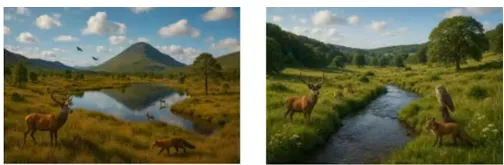
 Reference