Shipping giant changes course to save Sri Lanka whales
by AFP
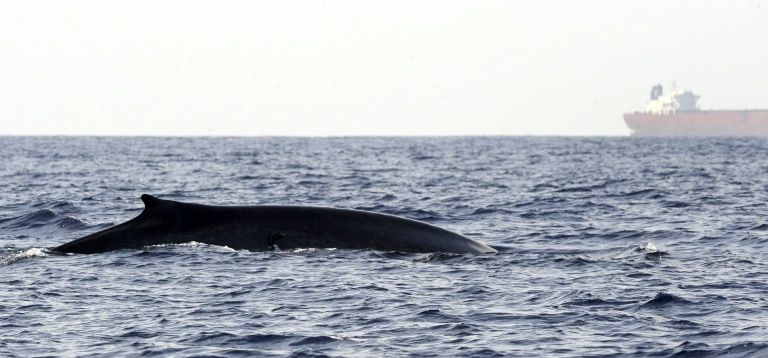
Campaigners believe more than a dozen blue whales have been killed in collisions with commercial ships in the last decade. Ishara S. KODIKARA / AFP
Animal rights activists on Friday cheered a move by a shipping giant to alter course in Sri Lankan waters to avoid collisions with blue whales, the world's largest mammals.
The island's southern coast has an unusually high density of blue whales, classed as endangered on the IUCN Red List of Threatened Species, and is one of the world's busiest international shipping lanes.
Campaigners believe more than a dozen of the gigantic animals -- the largest ever to have lived on Earth at up to 30 metres long and 150 tonnes -- have been killed in collisions with commercial ships in the last decade.
There have also been occasional reports of fishermen dying when their boats were run down by container ships in the area, a rich fishing ground.
International activists and local environmentalists have for years pressed authorities to shift the east-west shipping routes 15 nautical miles further offshore.
The Geneva-based Mediterranean Shipping Company (MSC), one of the world's biggest container carriers, announced Thursday that it had voluntarily adjusted its routes around Sri Lanka by that distance to reduce the risk of accidents involving whales, dolphins and porpoises.
The move could reduce the strike risk as much as 95 percent, the company said.
It is also ordering its smaller feeder vessels in the area to slow to 10 knots in blue whale habitats.
The International Fund for Animal Welfare welcomed the announcement, calling it "good news for both blue whales and for people".
The presence of the mammals has spawned a lucrative tourist whale-watching industry.
Sri Lankan animal rights activist and researcher Gehan Wijeratne said the topography of the ocean floor, currents and monsoons make the sea off southern Sri Lanka rich in nutrients and marine life.
"This rich food web results in an area which is optimal for fishing," Wijeratne said. "Not surprisingly whales also gather in this area."
Any move to improve the safety of fishermen and shipping will automatically have a positive impact on whales and whale watching, he added.
Leading Sri Lankan environmentalist Jagath Gunawardena told AFP that MSC's unilateral action exposed Colombo's failure to protect marine life and fishermen.
"We should be embarrassed that we failed, but an international shipping company had to take the initiative," he said.
※ Picks respects the rights of all copyright holders. If you do wish to make material edits, you will need to run them by the copyright holder for approval.
more from
AFP
AFP
'Ultra-processed foods a rising threat to health: researchers'
2025-11-20 00:00:00
AFP
Ireland's data centres power digital age, drain the grid
2025-11-20 00:00:00
AFP
Thousands of Kenyans displaced by Lake Naivasha flooding
2025-11-19 07:24:00
AFP
'Singapore seizes record rhino horn haul'
2025-11-18 11:22:00
BEST STORIES
Fair Observer
'The Amazon Under Threat: The Urgency of COP30 in Brazil'
2025-11-16 00:00:00
Science News
Cancer treatments may get a boost from mRNA COVID vaccines
2025-11-18 00:00:00
Travie
Unzen Onsen: Japan's Fiery Paradise for Relaxation and Reflection
2025-11-19 00:00:00
Street Food Guy
Can You Really Travel Comfortably in Economy Class?
2025-11-15 00:00:00
Environment
AFP
'Stranded, stressed' giraffes in Kenya relocated as habitats encroached
2025-11-18 00:02:00
AFP
'New research measures how much plastic is lethal for marine life'
2025-11-17 20:32:00
AFP
Cervical cancer vaccine push has saved 1.4 million lives: Gavi
2025-11-17 00:42:00
AFP
'Fight over fossil fuels drawdown looms at UN climate summit'
 Campaigners believe more than a dozen blue whales have been killed in collisions with commercial ships in the last decade. Ishara S. KODIKARA / AFP