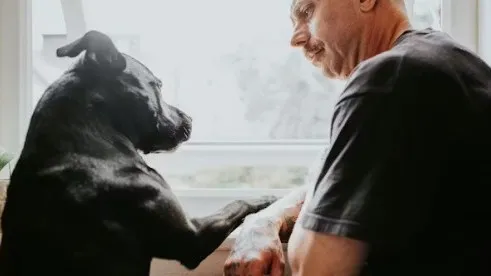
Some people appreciate relationships with pets to combat loneliness – but others simply prefer dogs’ company. Catherine Falls Commercial/Moment via Getty Images
It all seems part of what Mark Cushing, a lawyer and lobbyist for veterinary issues, calls “the pet revolution”: the more and more privileged place that pets occupy in American society. In his 2020 book “Pet Nation,” he argues that the internet has caused people to become more lonely, and this has made them focus more intensely on their pets – filling in for human relationships.
I would argue that something different is happening, however, particularly since the COVID-19 lockdown: Loving dogs has become an expression not of loneliness but of how unhappy many Americans are with society and other people.
And I am no different. I live with three dogs, and my love for them has driven me to research the culture of dog ownership in an effort to understand myself and other humans better. By nature, dogs are masters of social life who can communicate beyond the boundaries of their species. But I believe many Americans are expecting their pets to address problems that they cannot fix.
Rescuing shelter animals grew in popularity, and on social media people celebrated being at home with their pets. Dog content on Instagram and Pinterest now commonly includes hashtags like #DogsAreBetterThanPeople and #IPreferDogsToPeople.
One 2025 study found that dog owners tend to rate their pets more highly than their human loved ones in several areas, such as companionship and support. They also experienced fewer negative interactions with their dogs than with the closest people in their lives, including children, romantic partners and relatives.
Today, millennials make up the largest percentage of pet owners. Some cultural commentators argue dogs are especially important for this generation because other traditional markers of stability and adulthood – a mortgage, a child – feel out of reach or simply undesirable. According to the Harris Poll, a marketing research firm, 43% of Americans would prefer a pet to a child.
Amid those pressures, many people turn to the comfort of a pet – but the expectations for what dogs can bring to our lives are becoming increasingly unreasonable.
For some people, dogs are a way to feel loved, to relieve pressures to have kids, to fight the drudgery of their job, to reduce the stress of the rat race and to connect with the outdoors. Some expect pet ownership to improve their physical and mental health.
Even years after the pandemic lockdown, many people are spending more time at home – often with pets. curtoicurto/iStock via Getty Images Plus
But expecting that dogs will fill the social and emotional gaps in our lives is actually an obstacle to dogs’ flourishing, and human flourishing as well.
In philosophical terms, we could call this an extractive relationship: Humans are using dogs for their emotional labor, extracting things from them that they cannot get elsewhere or simply no longer wish to. Just like natural resource extraction, extractive relationships eventually become unsustainable.
The late cultural theorist Lauren Berlant argued that the present stage of capitalism creates a dynamic called “slow death,” a cycle in which “life building and the attrition of life are indistinguishable.” Keeping up is so exhausting that, in order to maintain that life, we need to do things that result in our slow degradation: Work becomes drudgery under unsustainable workloads, and the experience of dating suffers under the unhealthy pressure to have a partner.
Similarly, today’s dog culture is leading to unhealthy and unsustainable dynamics. Veterinarians are concerned that the rise of the “fur baby” lifestyle, in which people treat pets like human children, can harm animals, as owners seek unnecessary veterinary care, tests and medications. Pets staying at home alone while owners work suffer from boredom, which can cause chronic psychological distress and health problems. And as the number of pets goes up, many people wind up giving up their animal, overcrowding shelters.
So what should be done? Some philosophers and activists advocate for pet abolition, arguing that treating any animals as property is ethically indefensible.
Perhaps we can reconfigure aspects of home, family and society to be better for dogs and humans alike – more accessible health care and higher-quality food, for example. A world more focused on human thriving would be more focused on pets’ thriving, too. But that would make for a very different America than this one.
※ Picks respects the rights of all copyright holders. If you do wish to make material edits, you will need to run them by the copyright holder for approval.
more from
The Conversation
The Conversation
How Indigenous athletes challenge simple ideas of national unity at the Olympics
2026-02-17 00:00:00
The Conversation
February is hard on ‘night owls’ in northern climates, but there are ways to cope
2026-02-17 00:00:00
The Conversation
Landslides are NZ's deadliest natural hazard. Why does it still tolerate the risk?
2026-02-16 00:00:00
The Conversation
Southern right whales are having babies less often, but why?
2026-02-15 00:00:00
BEST STORIES
KoreaJoongAngDaily
Seoul to maintain 24-hour emergency care system over Lunar New Year holiday
2026-02-14 00:00:00
Street Food Guy
Where Locals Go to Celebrate St. Patrick’s Day in Chicago
2026-02-12 00:00:00
Inven Global
Dr. Lee Jang-joo on Gaming Disorder: Why Now Is the Golden Time to Challenge Its Medical Classification
2026-02-12 00:00:00
AllblancTV
The Ultimate Vacation Workout: Stay Fit While Traveling (Part 1/2)
2026-02-12 00:00:00
Lifestyle
The Conversation
Why eating cheap chocolate can feel embarrassing - even though no one else cares
2026-02-13 00:00:00
The Conversation
Living in space can change where your brain sits in your skull - new research
2026-02-13 00:00:00
The Conversation
Why are new tea towels worse at drying dishes than older ones?
2026-02-13 00:00:00
The Conversation
Some people gain confidence from thinking things through, others lose it - new research
 Some people appreciate relationships with pets to combat loneliness – but others simply prefer dogs’ company. Catherine Falls Commercial/Moment via Getty Images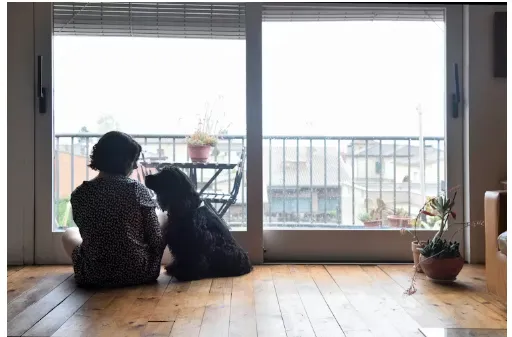
 Reference