Milan Cortina Winter Olympics: history, new events and Australian medal chances
by The Conversation
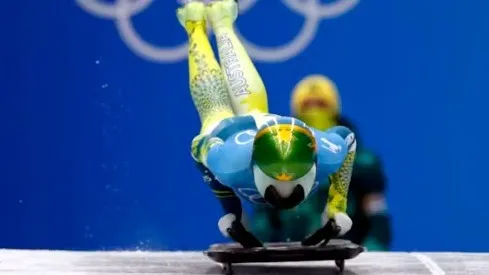
Australia’s Jaclyn Narracott in action during the Beijing 2022 Winter Olympics. Horcajuelo Guillaume/EPA
This year’s Winter Olympics will be held in northern Italy, starting on Friday.
They will be the most spread out in history: the two main competition sites – Milan and the winter resort of Cortina d'Ampezzo – are more than 400 kilometres apart.
Some 3500 athletes from 93 countries will compete in 16 sports for 245 gold medals.
What’s happening at the 2026 games?
Events are organised into broad categories, including ice sports (such as figure skating and curling), skiing and snowboarding (including moguls and halfpipe), Nordic events (such as cross-country and ski jumping) and sliding events (including skeleton and luge).
For the Milan Cortina games, the program has added eight new events designed to increase variety and gender parity.
The most significant addition is the sport of ski mountaineering, often referred to as “skimo”.
Winter Olympic Games/The Conversation, CC BY-SA
The sport requires competitors to ski uphill, transition to walking up steep climbs and then descend on skis.
The program will be the most gender-balanced winter games to date, with 47% women participation mainly thanks to the introduction of women’s double luge and a women’s large hill event in ski jumping.
While the Winter Olympics have been held in 21 cities in 13 different countries, climate change may limit the number of future host locations.
Following the success of these events, and support from the father of the modern Olympics Baron Pierre de Coubertin, the International Olympic Committee (IOC) decided to hold a separate winter competition in 1924.
Since then, Australia has competed in every Winter Olympics and its team has grown from one athlete in 1936 to more than50 in recent games.
Speed skater Colin Coates has represented Australia at the most winter games: six times between 1968 and 1988.
It took 58 years for Australia to claim its first Winter Olympic medal in 1994. Steven Bradbury, Richard Nizielski, Andrew Murtha and Kieran Hansen won bronze in the 5,000m short track speed skating relay.
Bradbury also famously won Australia’s first Winter Olympic gold medal in the 1,000m speed skating in 2002.
Australia has won 19 Winter Olympic medals, including six gold.
It has achieved most success in freestyle skiing events such as aerials and mogul, led by multiple medal winners Alisa Camplin and Lydia Lassila.
Australia’s medal chances in 2026
Australia heads into these games with realistic medal chances in a small number of sports where it has consistently punched above its weight. This may seem surprising for a country better known for beaches than snow but targeted investment and athlete pathways have paid off.
Australia’s strongest gold medal hope is in freestyle skiing moguls, a fast downhill event where athletes ski over steep bumps while performing two jumps.
Jakara Anthony, who won gold in Beijing in 2022, has dominated international competitions since then, regularly winning World Cup events – the highest level of competition outside the Olympics.
Aerial skiing has also emerged as a genuine medal opportunity for Australia.
Laura Peel has continued her strong international form with recent World Cup gold, while Danielle Scott has also topped the podium this season.
With two athletes consistently winning at the highest level outside the Olympics, Australia is a genuine podium contender in this discipline.
Snowboarding also offers strong chances.
In snowboard halfpipe, riders launch out of a giant ice channel and perform aerial tricks while being judged on height, difficulty and style. Scotty James has been among the world’s best for almost a decade and has won multiple World Championship medals.
Australia is also building serious depth through younger athletes such as Valentino Guseli, who has already claimed World Cup gold and is emerging as a genuine podium contender.
In women’s monobob, Bree Walker’s recent World Cup gold shows Australia is now a genuine contender in one of the games’ newer disciplines.
In skeleton, where athletes race head-first down an icy track at speeds exceeding 120 kilometres per hour, Jaclyn Narracott won silver in 2022 – Australia’s first sliding sport medal. Another podium finish is possible for her.
Beyond these core medal prospects, sports such as short track speed skating could also feature in Australia’s medal mix if athletes peak at the right time, with potential for 2026 to rival Australia’s most successful Winter Olympics to date.
※ Picks respects the rights of all copyright holders. If you do wish to make material edits, you will need to run them by the copyright holder for approval.
more from
The Conversation
The Conversation
Epiaceratherium itjilik: The rhino that lived in the Arctic
2026-02-09 00:00:00
The Conversation
AI is bad for the environment, and the problem is bigger than energy consumption
2026-02-09 00:00:00
The Conversation
A new comet was just discovered. Will it be visible in broad daylight?
2026-02-08 00:00:00
The Conversation
How to ensure affordable, safe and culturally grounded housing for Indigenous older adults
2026-02-08 00:00:00
BEST STORIES
The Conversation
Do trees prevent landslides? What science says about roots, rainfall and stability
2026-02-05 00:00:00
Knowable Magazine
'Why disease outbreaks on Chinese fur farms are a serious risk to public health'
2026-02-06 00:00:00
Street Food Guy
Best Cheap Business Class Flights to Europe (Without the Guesswork)
2026-02-06 00:00:00
The19th
Long COVID affects millions of children. The largest pediatric trial so far launches this year.
2026-02-08 00:00:00
Entertainment
The Conversation
Opera is not dying - but it needs a second act for the streaming era
2026-02-07 00:00:00
The Conversation
Here are Canada's 2026 Winter Olympic medal hopefuls, from hockey to freestyle skiing
2026-02-05 00:00:00
The Conversation
Afcon drama: what went wrong and what went right at the continent’s biggest football cup in Morocco
2026-02-04 00:00:00
The Conversation
From ski jumping to speedskating, winter sports represent physics in action
 Australia’s Jaclyn Narracott in action during the Beijing 2022 Winter Olympics. Horcajuelo Guillaume/EPA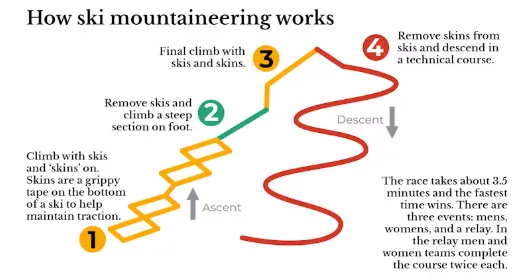


 Reference