Pop, soda or coke? The fizzy history behind America's favorite linguistic debate
by The Conversation
‘I’ll have a coke – no, not Coca-Cola, Sprite.’ Justin Sullivan/Getty Images
With burgers sizzling and classic rock thumping, many Americans revel in summer cookouts – at least until that wayward cousin asks for a “pop” in soda country, or even worse, a “coke” when they actually want a Sprite.
Few American linguistic debates have bubbled quite as long and effervescently as the one over whether a generic soft drink should be called a soda, pop or coke.
The word you use generally boils down to where you’re from: Midwesterners enjoy a good pop, while soda is tops in the North and far West. Southerners, long the cultural mavericks, don’t bat an eyelash asking for coke – lowercase – before homing in on exactly the type they want: Perhaps a root beer or a Coke, uppercase.
As a linguist who studies American dialects, I’m less interested in this regional divide and far more fascinated by the unexpected history behind how a fizzy “health” drink from the early 1800s spawned the modern soft drink’s many names and iterations.
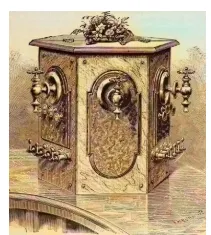
An 1878 engraving of a soda fountain. Smith Collection/Gado via Getty Images
The process of carbonating water was first discovered in the late 1700s. By the early 1800s, this carbonated water had become popular as a health drink and was often referred to as “soda water.” The word “soda” likely came from “sodium,” since these drinks often contained salts, which were then believed to have healing properties.
Given its alleged curative effects for health issues such as indigestion, pharmacists sold soda water at soda fountains, innovative devices that created carbonated water to be sold by the glass. A chemistry professor, Benjamin Stillman, set up the first such device in a drugstore in New Haven, Connecticut, in 1806. Its eventual success inspired a boom of soda fountains in drugstores and health spas.
These flavored, sweetened versions gave rise to the linking of the word “soda” with a sweetened carbonated beverage, as opposed to simple, carbonated water.
Seltzer – today’s popular term for such sparkling water – was around, too. But it was used only for the naturally carbonated mineral water from the German town Nieder-Selters. Unlike Perrier, sourced similarly from a specific spring in France, seltzer made the leap to becoming a generic term for fizzy water.
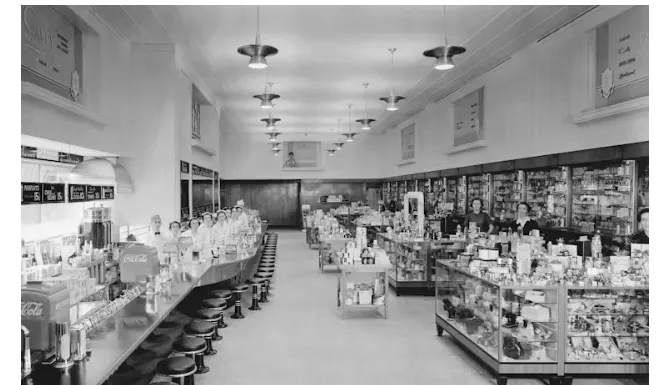
Many late-19th-century and early 20th-century drugstores contained soda fountains – a nod to the original belief that the sugary, bubbly drink possessed medicinal qualities. Hall of Electrical History Foundation/Corbis via Getty Images
Regional naming patterns
So how did “soda” come to be called so many different things in different places?
It all stems from a mix of economic enterprise and linguistic ingenuity.
The popularity of “soda” in the Northeast likely reflects the soda fountain’s longer history in the region. Since a lot of Americans living in the Northeast migrated to California in the mid-to-late 1800s, the name likely traveled west with them.
As for the Midwestern preference for “pop” – well, the earliest American use of the term to refer to a sparkling beverage appeared in the 1840s in the name of a flavored version called “ginger pop.” Such ginger-flavored pop, though, was around in Britain by 1816, since a Newcastle songbook is where you can first see it used in text. The “pop” seems to be onomatopoeic for the noise made when the cork was released from the bottle before drinking.
Linguists don’t fully know why “pop” became so popular in the Midwest. But one theory links it to a Michigan bottling company, Feigenson Brothers Bottling Works – today known as Faygo Beverages – that used “pop” in the name of the sodas they marketed and sold. Another theory suggests that because bottles were more common in the region, soda drinkers were more likely to hear the “pop” sound than in the Northeast, where soda fountains reigned.
As for using coke generically, the first Coca-Cola was served in 1886 by Dr. John Pemberton, a pharmacist at Jacobs’ Pharmacy in Atlanta and the founder of the company. In the 1900s, the Coca-Cola company tried to stamp out the use of “Coke” for “Coca-Cola.” But that ship had already sailed. Since Coca-Cola originated and was overwhelmingly popular in the South, its generic use grew out of the fact that people almost always asked for “Coke.”
Due to the growing popularity of soda water concoctions, eventually “soft drink” came to mean only such sweetened carbonated beverages, a linguistic testament to America’s enduring love affair with sugar and bubbles.
With the average American guzzling almost 40 gallons per year, you can call it whatever you what. Just don’t call it healthy.
※ Picks respects the rights of all copyright holders. If you do wish to make material edits, you will need to run them by the copyright holder for approval.
more from
The Conversation
The Conversation
How pecans went from ignored trees to a holiday staple - the 8,000-year history of America's only native major nut crop
2025-11-21 00:00:00
The Conversation
The fire is out, but Tongariro is now at risk of losing its unique biological legacy
2025-11-20 00:00:00
The Conversation
'Reduced air pollution is making clouds reflect less sunlight'
2025-11-20 00:00:00
The Conversation
Why are women's shoes so pointy? A fashion expert on impractical but stylish footwear
2025-11-19 00:00:00
BEST STORIES
AFP
'Stranded, stressed' giraffes in Kenya relocated as habitats encroached
2025-11-18 00:02:00
Fair Observer
'The Amazon Under Threat: The Urgency of COP30 in Brazil'
2025-11-16 00:00:00
KoreaJoongAngDaily
Jongmyo Shrine designated as World Heritage district
2025-11-15 00:00:00
Inven Global
Calls Grow for Presidential Presence at the Korea Game Awards Ahead of G-Star 2025
2025-11-17 00:00:00
Entertainment
The Conversation
Would you watch a film with an AI actor? What Tilly Norwood tells us about art - and labour rights
2025-10-19 00:00:00
The Conversation
Why ghosts wear clothes or white sheets instead of appearing in the nude
2025-10-15 00:00:00
The Conversation
When you're caught between 'yes' and 'no,' here's why 'maybe' isn't the way to go
2025-09-16 00:00:00
The Conversation
Why is the object of golf to play as little golf as possible?
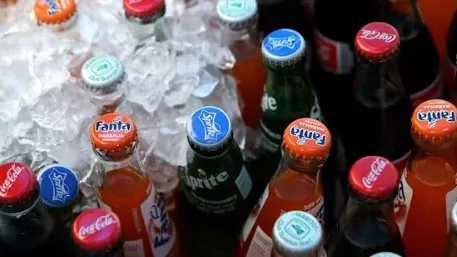 ‘I’ll have a coke – no, not Coca-Cola, Sprite.’ Justin Sullivan/Getty Images