Decluttering can be stressful - a clinical psychologist explains how personal values can make it easier
by The Conversation
Updated: Feb 22, 2025, 08:55
Asking how discarding an item fits with a person’s goals can help them decide whether to keep it. MoMo Productions via Getty Images
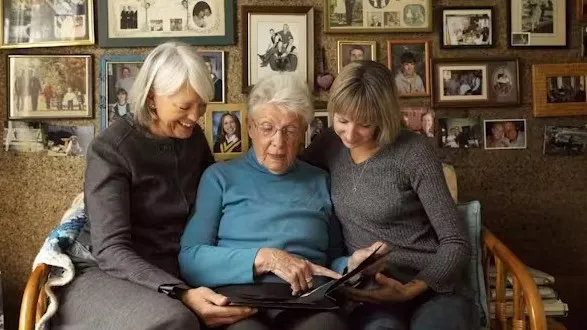
I recently helped my mom sort through boxes she inherited when my grandparents passed away. One box was labeled – either ironically or genuinely – “toothpick holders and other treasures.” Inside were many keepsakes from moments now lost to history – although we found no toothpick holders.
My favorite of the items we sorted through was a solitary puzzle piece, an artifact reflecting my late grandmother’s penchant for hiding the final piece to a jigsaw puzzle just to swoop in at the last moment and finish it.
After several hours of reminiscing, my mom and I threw away 90% of what we had sorted.
“Why did I keep this?” is a question I hear frequently, both from my family and friends and from patients. I am a licensed clinical psychologist whose research focuses on the characterization, assessment and treatment of hoarding disorder, particularly for adults 60 years of age or older. As such, I spend a great deal of my time thinking about this question.
What drives the need to keep stuff?
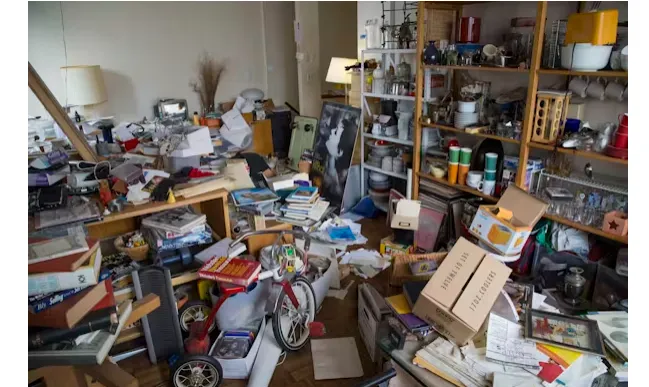
Hoarding disorder is a psychiatric condition defined by urges to save items and difficulty discarding current possessions. For adults with “clinically severe” hoarding disorder, this leads to a level of household clutter that impairs daily functioning and can even create a fire hazard. In my professional experience, however, many adults struggle with clutter even if they do not meet the clinical criteria for hoarding disorder.
Time to declutter. Kurt Whitman/Education Images via Getty Images
When I was a graduate student, I conducted a study in which we asked adults with hoarding disorder to spend 15 minutes making decisions about whether to keep or discard various items brought from their home. Participants could sort whatever items they wanted. Most chose to sort paper items such as old mail, cards or notes.
We found that age was associated with lower levels of distress during the task, such that participants who were older tended to feel less stressed when making the decision about what to keep and what to discard. We also found that many participants, particularly those who were older, actually reported positive emotions while sorting their items.
In new research publishing soon, my current team replicated this finding using a home-based version of the task. This suggests that fear of making the wrong decision isn’t a universal driver of our urge to save items.
In fact, a study my team published in August 2024 with adults over 50 with hoarding disorder suggests that altruism, a personality trait of wanting to help others, may explain why some people keep items that others might discard. My colleagues and I compared our participants’ personality profiles with that of adults in the general population of the same gender and age group. Compared with the general population, participants with hoarding disorder scored almost universally high on altruism.
Altruism also comes up frequently in my clinical work with older adults who struggle with clutter. People in our studies often tell me that they have held onto something out of a sense of responsibility, either for the item itself or to the environment.
“I need it to go to a good home” and “my grandmother gave this to me” are sentiments we commonly hear. Thus, people may keep things not out of fear of losing them but because saving them is consistent with their values.
Leaning into values
In a 2024 study, my team demonstrated that taking a values-based approach to decluttering helps older adults to decrease household clutter and increases their positive affect, a state of mind characterized by feelings such as joy and contentment. Clinicians visited the homes of older adults with hoarding disorder for one hour per week for six weeks. At each visit, the clinicians used a technique called motivational interviewing to help participants talk through their decisions while they sorted household clutter.
We found that having participants start with identifying their values allowed them to maintain focus on their long-term goals. Too often, people focus on the immediate ability of an object to “spark joy” and forget to consider whether an object has greater meaning and purpose. Values are the abstract beliefs that we humans use to create our goals. Values are whatever drives us and can include family, faith or frivolity.
Because values are subjective, what people identify as important to keep is also subjective. For example, the dress I wore to my sister’s wedding reminded me of a wonderful day. However, when it no longer fit I gave it away because doing so was more consistent with my values of utility and helpfulness: I wanted the dress to go to someone who needed it and would use it. Someone who more strongly valued family and beauty might have prioritized keeping the dress because of the aesthetics and its link to a family event.
Additionally, we found that instead of challenging the reasons a person might have for keeping an item, it is helpful to instead focus on eliciting their reasons for discarding it and the goals they have for their home and their life.
Start with writing out your values. Every object in your home should feel value-consistent for you. For example, if tradition and faith are important values for you, you might be more inclined to hold onto a cookbook that was made by the elders at your church and more able to let go of a cookbook you picked up on a whim at a bookstore.
If, instead, health and creativity are your core values, it might be more important to hold onto a cookbook of novel ways to sneak more vegetables into your diet.
Defining value-consistent goals for using your space can help to maintain motivation as you declutter. Are you clearing off your desk so you can work more efficiently? Making space on kitchen counters to bake cookies with your grandchildren?
Remember that sometimes your values will conflict. At those moments, it may help to reflect on whether keeping or discarding an object will bring you closer to your goals for the space.
Similarly, remember that values are subjective. If you are helping a loved one declutter, maintain a curious, nonjudgmental attitude. Where you might see a box filled with junk, your grandmother might see something filled with “toothpick holders and other treasures.”
Reference Written by Mary E. Dozier Provided by The Conversation
※ Picks respects the rights of all copyright holders. If you do wish to make material edits, you will need to run them by the copyright holder for approval.
more from
The Conversation
The Conversation
Flood‑damaged Nepal wants help from the global climate Loss and Damage Fund – but it’s waiting, along with 118 other countries
2026-09-21 00:00:00
The Conversation
Physicists zoom into the birth of cosmic rainstorms with new CERN study
2026-09-21 00:00:00
The Conversation
'We could soon be able to track changes in Australia's forests in near-real time - using satellites'
2026-09-20 00:00:00
The Conversation
Peptides are spreading on social media. Here's how platforms can better protect public health
2026-09-20 00:00:00
BEST STORIES
Travie
Sejong Travel Guide: Gourmet Eats, Namsan, and Jochiwon
2026-09-20 00:00:00
Inven Global
'Torizon Telecom': A Classic-Style Shooter Built Entirely of Text
2026-09-19 00:00:00
Fair Observer
Disaster-Prone Indonesia, Reckless Fiscal Policy
2026-09-18 00:00:00
Street Food Guy
Can You Rent a Car at Antalya Airport Without a Credit Card?
2026-09-21 00:00:00
Lifestyle
The Conversation
'Why does your brain mix up memories? A new study examines how memories are misplaced in your brain's filing cabinets'
2026-09-19 00:00:00
The Conversation
No, AI systems don't have a drive to survive - a developmental psychologist explains why it only looks that way
2026-09-15 00:00:00
The Conversation
How soybeans took over the American diet - without anyone noticing
2026-09-13 00:00:00
The Conversation
'I'm a pediatrician in Michigan who created Rx Kids, one of the nation's largest anti-poverty programs - here's what I've learned about how medical schools can improve communi
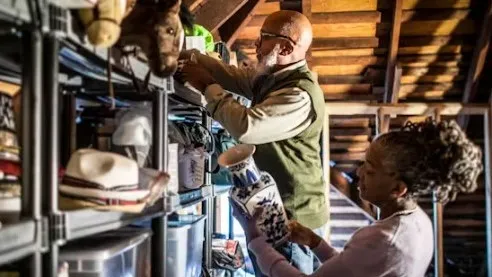 Asking how discarding an item fits with a person’s goals can help them decide whether to keep it. MoMo Productions via Getty Images